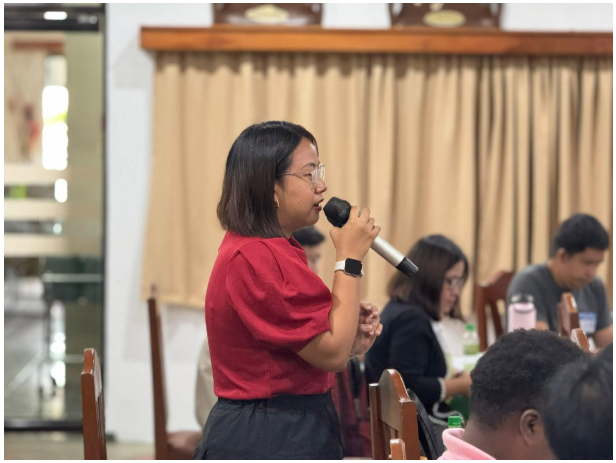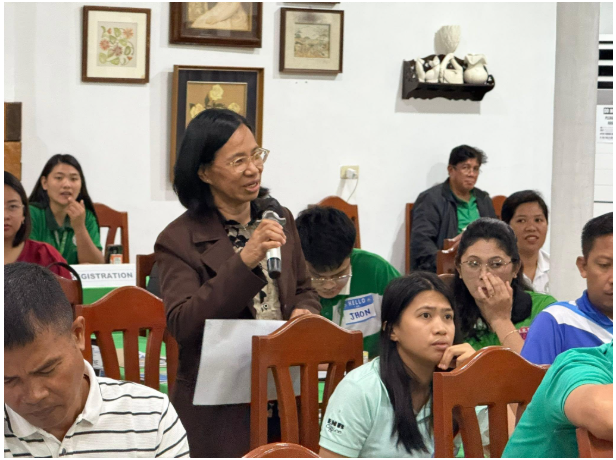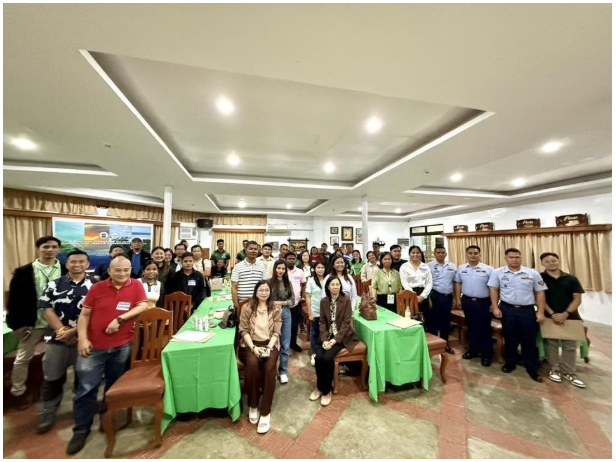

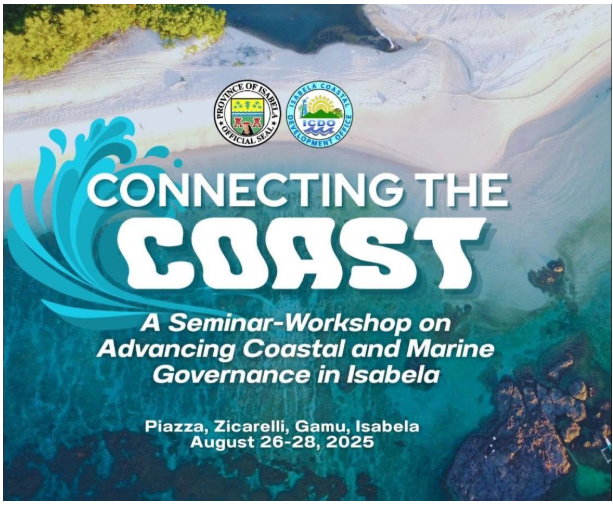
Demonstrating its active role in science-based multi-sectoral governance and sustainable coastal development, Isabela State University (ISU) participated and contributed in “Connecting the Coasts: A Seminar-Workshop on Coastal and Marine Governance,” held from August 26 to 28, 2026, at Piazza Zicarelli in Gamu, Isabela.
Representing Isabela State University were Ms. Goldyn Anne A. Comisario from the Institute of Fisheries and Ms. Flordeliza A. Bassiag from the Office of Campus Research. The three-day event was organized by the Provincial Government of Isabela through the Isabela Coastal Development Office (ICDO), assembling a total of 60 participants from national and provincial government agencies, non-government organizations, academia, and local government units (LGUs)—all unified under a single vision to protect, manage, and sustainably develop Isabela’s coastal and marine resources.
The workshop brought together key institutional partners, including the Bureau of Fisheries and Aquatic Resources (BFAR), National Commission on Indigenous Peoples (NCIP), Department of Trade and Industry (DTI), Philippine Coast Guard (PCG), as well as municipal environment, agriculture, tourism, planning offices, and Indigenous Peoples Mandatory Representatives (IPMRs) from the province’s coastal municipalities. Joining them were provincial agencies covering planning, environment, agriculture, cooperatives, information, and tourism, alongside academic delegates from ISU Echague and Philippine Normal University (PNU) North Luzon.
Driven by the COAST Framework
The event was anchored on the COAST objectives presented by Isabela Coastal Development Officer Ms. Gretchen F. Valdez, which outlined the collective agenda of the gathering:
C — Connect stakeholders for stronger collaboration and partnership
O — Orient participants on legal mandates, policies, insights, and best practices
A — Assess pressing coastal challenges and emergent opportunities
S — Strengthen institutional capacities for inclusive, science-based decision-making
T — Transform inter-agency insights into actionable, long-term sustainable solutions
Day 1: Legal Frameworks, Local Governance, and Biodiversity Conservation
The opening day focused on laying a firm governance and legal foundation. Atty. Ma. Isabel R. Cañaveral from the UP Institute for Maritime Affairs and Law of the Sea opened the plenary with a detailed overview of legal mandates and policy frameworks governing coastal spaces in the Philippines. Following her talk, Mr. Ian Michael Pascual of DILG Isabela highlighted the frontline role of LGUs in enforcing coastal laws and maritime regulations.
Transitioning to ecological management, Mr. Elson Q. Aca, Training Coordinator of Marine Wildlife Watch of the Philippines, engaged participants on marine biodiversity conservation and species protection, emphasizing the ecological sensitivity of fragile marine ecosystems. Day 1 concluded with presentations from provincial offices and the Philippine Coast Guard detailing ongoing operational programs for coastal protection, setting the stage for open dialogue across sectors.
Day 2: Participatory Planning, Community Governance, and Climate Resilience
The second day emphasized grassroots innovation, participatory mapping, and climate adaptation. Mr. Jose G. Bueno, Jr. of DENR Region 2 Forest Management Services introduced participatory planning tools and risk-mapping techniques to ensure community engagement in spatial decisions. Prof. Dr. Benjamin Vallejo Jr. from the UP Center for Integrative and Development Studies presented science-driven strategies for community-based coastal governance, while Mr. Robert Ray Medrano of the Earth Island Institute shared practical approaches from their Plastic Reduction Campaign to curb marine pollution.
Navigating complex governance structures, Park Operations Superintendent V Mr. Nestor S. Lorenzo provided critical insights into managing the Northern Sierra Madre Natural Park and the imperative of inter-agency synchronization. A dedicated panel discussion featuring municipal representatives from Dinapigue, Divilacan, Palanan, and Maconacon showcased localized best practices in coastal resource management, facilitated by Dr. Jandy Danzalan and Atty. Donna Remigio of PNU-North Luzon. Closing the day, Dr. Laura David of the UP Marine Science Institute delivered a virtual lecture on the impacts of climate change on marine ecosystems, calling for urgent, adaptive, and science-informed local action.
Day 3: The Isabela Coastal Primer and Actionable Strategic Roadmaps
The final day marked a pivotal transition from dialogue to structured strategic planning. Ms. Gretchen F. Valdez presented the landmark Isabela Coastal Primer—a foundational document compiled from extensive field data and multi-stakeholder inputs that synthesizes critical information on coastal ecosystems, demographics, and existing governance mechanisms to guide future municipal planning.
Subsequent workshop sessions, led by Dr. Danzalan and Atty. Remigio, guided the 60 participants in translating shared visions into concrete action points across key themes: sustainable fisheries, environmental protection, climate resilience, indigenous heritage, and institutional governance gaps.
The three-day seminar-workshop culminated in the ceremonial signing of the Commitment Wall. Through their signatures, representatives from ISU and partner agencies pledged their ongoing resolve to protect, develop, and promote Isabela’s coastlines. By bridging academic research, provincial governance, and local community leadership, Isabela State University continues to demonstrate its steadfast dedication to science-based coastal stewardship, inter-agency policy alignment, and sustainable marine resource management.
Content and Photo Credits: Institute of Fisheries