

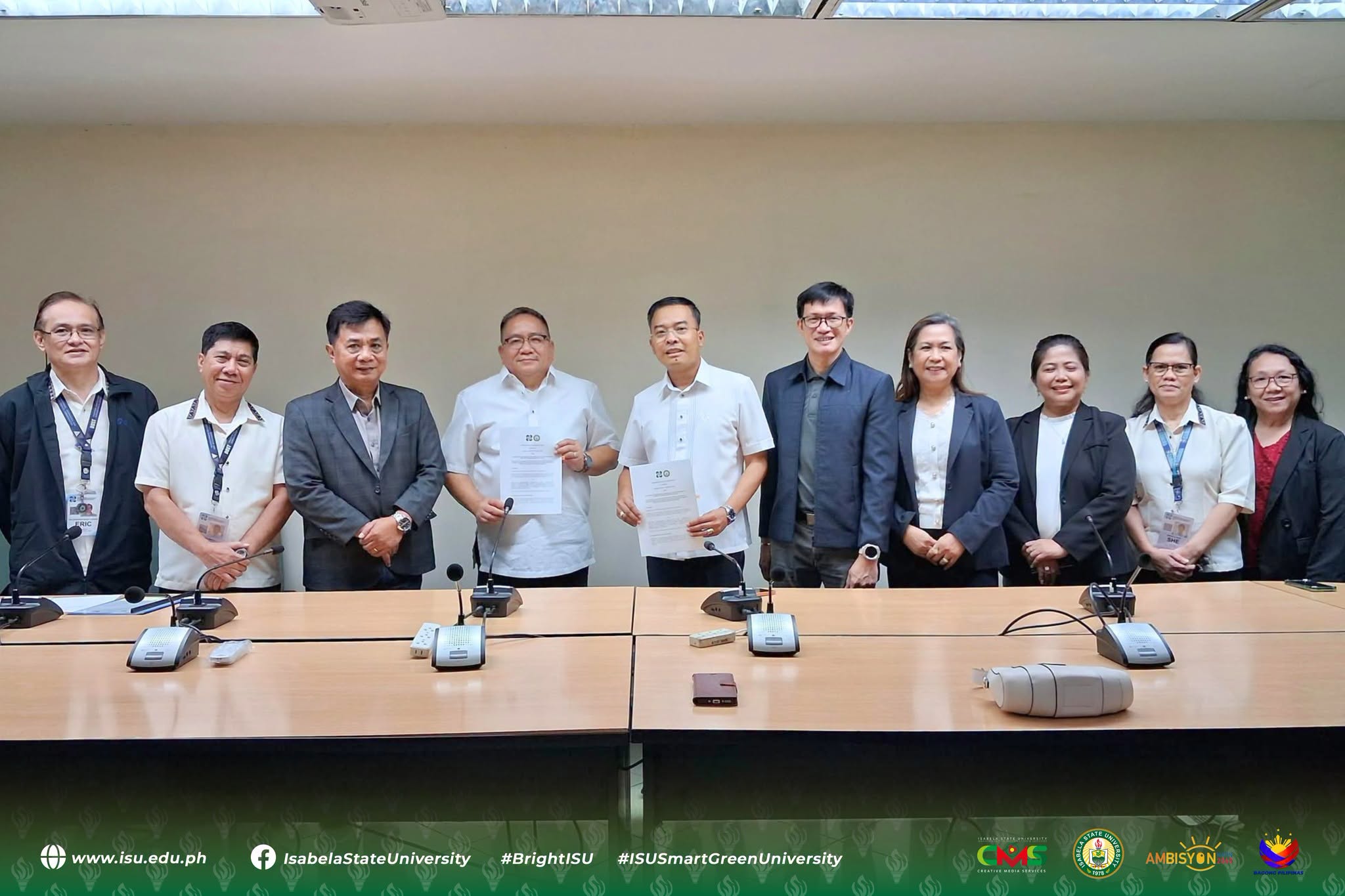
Isabela State University (ISU) and the Philippine Atmospheric, Geophysical and Astronomical Services Administration (PAGASA) formalized a partnership on August 17, 2026, through the signing of a Memorandum of Understanding (MOU) for the collaborative implementation of the project, “Synergistic Strategies for Sustainable Water Resources and Dam Management under Extreme Climate Variability (3S-WaRM).”
The MOU was signed on behalf of ISU by Dr. Boyet L. Batang (University President), accompanied by the University’s Vice Presidents.
Funded by the Department of Science and Technology (DOST), the 3S-WaRM project focuses on improving water resource management, reservoir optimization, and climate-resilient dam operations within the Magat River Basin. Its implementation requires reliable climate data, rainfall forecasting, and meteorological expertise to strengthen hydrological modeling, early warning systems, and decision support mechanisms.
Through the MOU, ISU and PAGASA aims to establish a collaborative framework that will facilitate the sharing and utilization of climate and meteorological data, technical expertise, research capabilities, and knowledge toward more informed and resilient water resource management.
The partnership will particularly support the provision and utilization of historical, real-time, and forecasted climate data including rainfall, temperature, and typhoon tracks which are relevant to the Magat River Basin and surrounding areas. It will also facilitate the integration of PAGASA climate data into hydrological and water resource models. The collaboration will likewise explore ensemble forecasting, as well as technical guidance on climate downscaling and forecasting methodologies.
A key component of the collaboration is the development and enhancement of early warning systems for flood and drought risks. Both institutions will work to develop forecasting tools, improve warning dissemination mechanisms, and support its integration with community-based disaster risk reduction initiatives.
The MOU also provides for joint research on climate variability and extreme events, as well as the impacts of climate change on water resources. These efforts may result in co-authored scientific publications and technical reports to contribute to the body of knowledge on climate-resilient water management.
Capacity building will also form another area of cooperation, with the two institutions to undertake training workshops on climate data utilization, technical seminars on forecasting and modeling, and exchanges among experts and researchers. The partnership also provides opportunities for technical inputs to dam operation guidelines, water resource management policies, and national and regional Disaster Risk Reduction and Management (DRRM) frameworks.