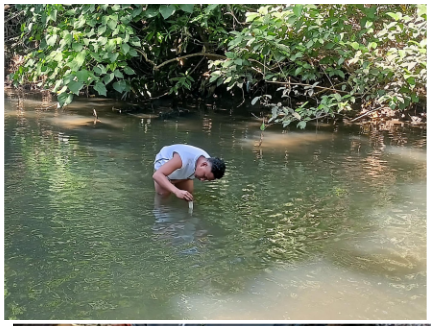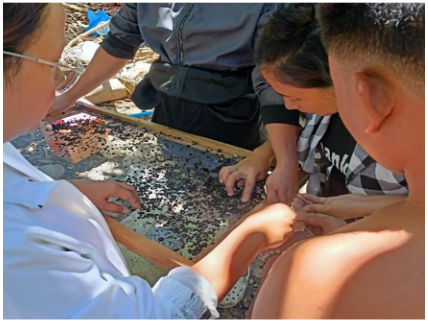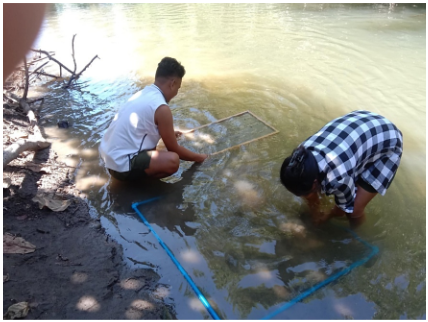




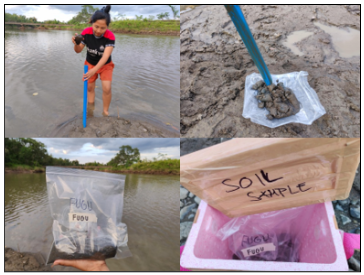
Providing a comprehensive environmental profile of one of the region’s vital inland waterways, a series of watershed-level thesis studies conducted under the Institute of Fisheries (IoF) at Isabela State University (ISU) Main Campus has evaluated the composition, distribution, and diversity of freshwater shellfish along both the upstream and downstream sections of the Calao River. The interconnected research initiatives—examining upstream stations across Ramon, Santiago City, and San Isidro, and downstream stations across Echague, Alicia, and Angadanan—were completed as part of the requirements for the Bachelor of Science in Fisheries and Aquatic Sciences under the guidance of thesis adviser Goldyn Anne A. Comisario, MSc, FHEA, alongside academic advisory committees from the Institute of Fisheries.
Freshwater mollusks, comprising bivalves and gastropods, serve as critical ecological indicators that reflect river health, water quality, and sediment dynamics while supporting local communities through nutrition and economic livelihoods. Utilizing a standardized 1 m2 quadrat sampling protocol combined with ex-situ water and soil testing at accredited facilities, the researchers documented distinct longitudinal variations in species assemblages. Upstream and downstream assessments collectively identified three primary freshwater mollusk taxa: the Asian clam (Corbicula fluminea, locally known as tulya), the Philippine freshwater snail (Jagora asperata, locally known as agurong), and the ubiquitous invasive quilted melania (Tarebia granifera, locally known as suso). While Tarebia granifera demonstrated extreme adaptability and dominated benthic communities across almost all surveyed stations—thriving in both muddy-sandy and rocky bottoms—Corbicula fluminea was strictly localized and scarce, appearing primarily in fast-flowing, oxygen-rich, rocky stretches such as in Brgy. Baniket in Angadanan.
Population structure and biodiversity analyses across the watershed revealed uniform ecological stress and low species evenness. In multiple sampling stations, the complete dominance of Tarebia granifera resulted in diversity index values (Shannon-Wiener and Simpson’s indices) approaching zero, while multi-species sites exhibited only marginal diversity. Furthermore, size-frequency measurements using digital calipers indicated that populations were heavily skewed toward juvenile and sub-adult size classes, pointing toward active seasonal recruitment alongside heavy harvesting pressure on mature adult specimens. Physicochemical profiling linked these distributional patterns to localized environmental stressors, including agricultural nutrient loading, elevated nitrogen and phosphate levels in lowland areas, and unfavorable substrate conditions in stagnant or degraded zones such as Brgy. Quezon in San Isidro, where shellfish were entirely absent.
Emphasizing that hydrological parameters, water flow rates, substrate composition, and nutrient loads critically shape freshwater mollusk distribution, the researchers outline essential management recommendations to safeguard the ecological integrity of the Calao River. These measures include establishing protected aquatic sanctuaries in stable, rocky riverbeds that naturally support biodiversity and recruitment, implementing stringent agricultural buffer zones to curb nutrient runoff, and fostering community-based resource management through local education and regular ecological monitoring. Through these rigorous, science-based assessments, the Institute of Fisheries at Isabela State University continues to spearhead investigations dedicated to watershed preservation, aquatic resource management, and ecological resilience across Northern Luzon.
Content and Photo Credits: Institute of Fisheries