ISU Institute of Fisheries Empowers Barangay San Juan Communities Through Gender-Inclusive Aquaculture and Post-Harvest Training Program
Thursday, March 20, 2025
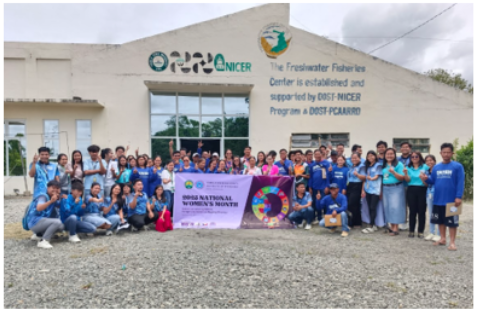
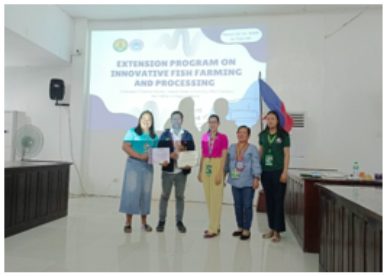
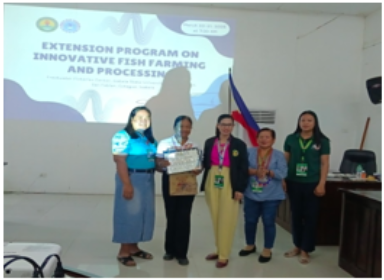
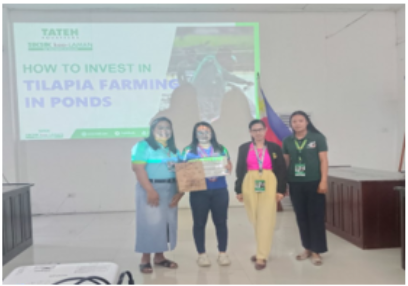
Demonstrating a steadfast commitment to community development, food security, and gender equality, the Institute of Fisheries (IoF) and the Freshwater Fisheries Center (FFC) of Isabela State University (ISU) Main Campus have successfully completed their banner community engagement project titled “Enhancing Community Engagement: Gender Equity and Empowerment in the Aquaculture and Post-Harvest Fisheries in the Municipality of Echague, Isabela.”
Led by Project Leader Eugene Yolanda I. Maxion, M.Sc., alongside study leaders Goldyn Anne A. Comisario, M.Sc., FHEA, Dr. Mary Joy L. Asprec, Dr. Isagani P. Angeles Jr., and Dr. Laila G. Castro, the multi-year initiative directly targeted the Mengal Women and Bidani Community of Barangay San Juan, Echague. The program was formally sealed through a Memorandum of Agreement (MOA) between ISU—represented by University President Dr. Boyet L. Batang—and the Local Government Unit (LGU) of Echague, headed by Mayor Hon. Faustino A. Dy V. Additional collaborative support was provided by the Bureau of Fisheries and Aquatic Resources (BFAR) Region 02, the BFAR Cagayan Valley Regional Outreach Station for Freshwater Research (CVROSFR), the Barangay San Juan SK Federation, and the Rural Improvement Club (RIC).
Bridging Research and Grassroots Empowerment
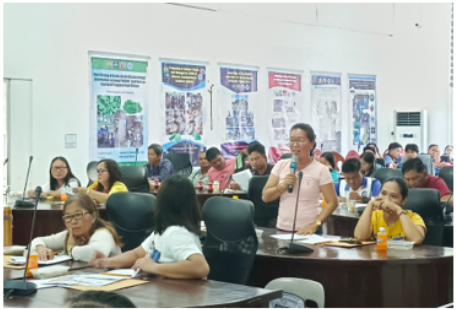
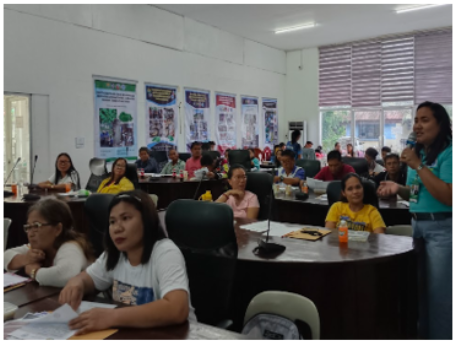
The comprehensive extension program was designed to combat systemic post-harvest losses, income insecurity, and socio-economic disparities by prioritizing women as primary economic drivers in the fisheries value chain. Structured around a holistic, three-pronged technical capacity-building framework, the project delivered specialized training workshops combining theoretical lectures with hands-on practical exercises at the ISU Freshwater Fisheries Center:
Backyard Hito (Catfish) Farming: Facilitated in partnership with BFAR CVROSFR senior aquaculturist Ms. Melba Francisco, this component trained local fisherfolk and women’s groups in resilient backyard grow-out management. Participants learned optimal water quality parameters (dissolved oxygen, pH, and temperature), feeding strategies, fingerling selection, and cost-benefit budgeting, followed by a live demonstration of broodstock selection and induced spawning protocols at the FFC hatchery facilities.
Small-Scale Aquaponics Systems: Spearheaded by Mr. Bernard Bañaress of BFAR Region 02, this module introduced closed-loop, water-efficient integrated systems. Participants learned how to combine fish rearing with hydroponic plant cultivation—utilizing fish metabolic waste to nourish leafy vegetables like lettuce and basil while biological filters clean the water, maximizing spatial and resource efficiency for backyard settings.
Smoked Nile Tilapia Processing & Fisheries Entrepreneurship: Led by Mr. Elievier Pascua and FFC research staff, this post-harvest training addressed food spoilage and value addition. Community members received hands-on instruction in hygienic fish handling, gutting, brining, pre-smoking drying (pellicle formation), and smoking chamber operation using local wood materials. Complementary lectures on fisheries entrepreneurship by faculty members equipped participants with basic financial literacy, product pricing strategies, vacuum-packaging techniques, and market linkage methods.
Sustainable Impacts and Future Outlook
The project’s rigorous approach generated tangible outcomes, including marketable batches of vacuum-sealed smoked Nile tilapia (tinapang tilapia), operational backyard aquaculture setups, and bilingual Information, Education, and Communication (IEC) materials distributed to participants. Through institutional partnerships, structured technical mentoring, and continuous monitoring supported by ISU fisheries students, the project establishes a scalable, replicable model for climate-resilient livelihoods and enhanced municipal food security across Isabela Province.
Content and Photo Credits: ISU Institute of Fisheries