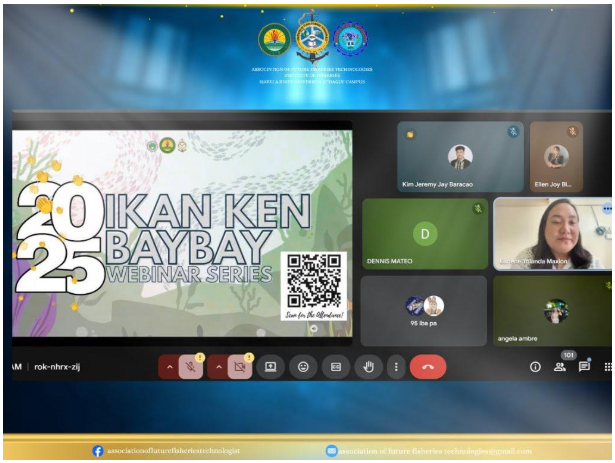
In a steadfast commitment to marine conservation, sustainable fisheries, and community empowerment, Isabela State University (ISU) through its Institute of Fisheries (IoF), in collaboration with the Association of Future Fisheries Technologists (AFFT) and the IoF-Student Body Organization (IoF-SBO), successfully convened the virtual learning event titled “Ikan ken Baybay Webinar Series 1: Illuminating the Rich Essence and Knowledge of Fisheries and Aquatic Sciences” last October 25, 2025, via Google Meet. The inaugural session brought together 100 online participants consisting of aquatic science enthusiasts, academic scholars, student leaders, and coastal stakeholders to advance ocean literacy, elevate marine-health awareness, and strengthen community capacity-building across the region.
The webinar provided a comprehensive platform for expert insights that directly support the United Nations Sustainable Development Goal 14 (Life Below Water), specifically on supporting and maintaining marine ecosystems.
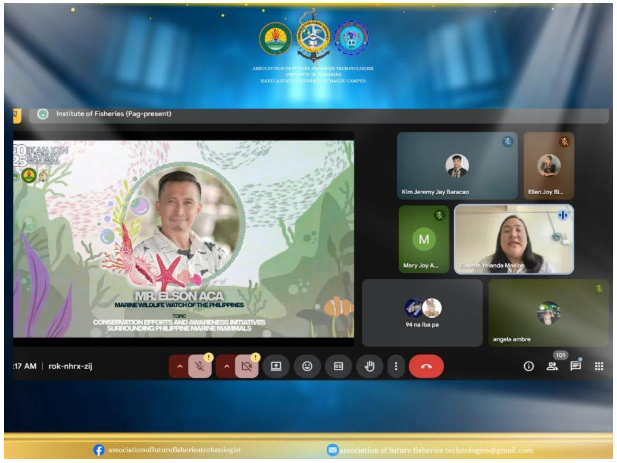
Opening the knowledge-sharing sessions, Mr. Elson Aca, representative of Marine Wildlife Watch of the Philippines, presented on “Conservation Efforts and Awareness Initiatives Surrounding Philippine Marine Mammals.” Mr. Aca emphasized the role of marine mammals as key indicators of ecosystem health, highlighting how community-led protection efforts and targeted public education serve as essential mechanisms for protecting marine biodiversity in Philippine waters.
Bridging ecological conservation with regional geography, Ms. Gretchen Valdez, Isabela Coastal Development Officer from the Provincial Government of Isabela, delivered a presentation on “Sierra Madre and the Coastal Landscape of Isabela.” Ms. Valdez detailed the ridge-to-reef connection between the Sierra Madre mountain range and Isabela’s eastern coastlines. Her discussion underscored local governance strategies, sustainable coastal zoning, and ecosystem management frameworks designed to build resilient coastal communities and safeguard vulnerable marine habitats.
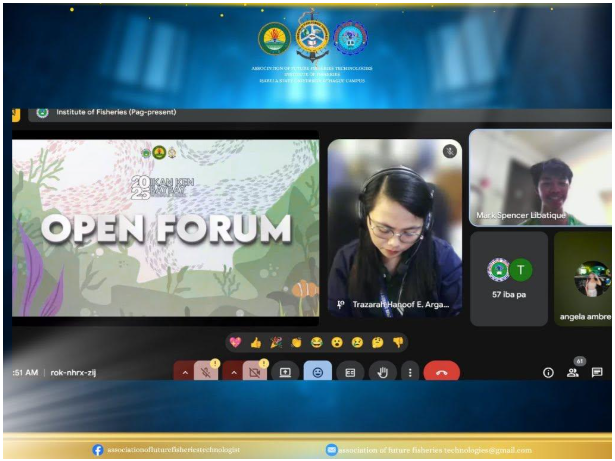
Providing vital technical guidance for sustainable resource management, Ms. Trazarah Hanoof Agarin, Project Leader of the National Stock Assessment Program (NSAP) in Region IV-A, presented an “Overview on Fish Stock Assessment.” Ms. Agarin outlined fundamental stock assessment methodologies and demonstrated how scientific data collection informs policy formulation, prevents overfishing, and ensures long-term food security and livelihood stability for coastal fishers.
Through this collaborative initiative, Isabela State University continues to demonstrate its commitment to driving actionable ocean literacy, advocating for marine-health awareness, and expanding community capacity-building. By bridging academic instruction, local provincial governance, and national research bodies, the Institute of Fisheries reaffirms its dedication to nurturing competent fisheries professionals and leading science-backed marine stewardship across Northern Luzon.
Content and Photo Credits: Institute of Fisheries