






A university’s purchasing decisions can influence more than its daily operations. Every sack of rice, basket of vegetables, and agricultural product it purchases represents an opportunity to support local livelihoods, strengthen community enterprises, and keep economic activity within the province. For an agricultural province like Isabela, prioritizing locally produced goods is one way a state university can translate its public service mandate into meaningful economic support for farming communities.
The opportunity is substantial. Data from the Philippine Statistics Authority (PSA) show that Isabela recorded ₱61.73 billion in crop production value in 2024, ranking second among all provinces in the country. The province also accounted for 3.3 percent of the national gross value added in agriculture, forestry, and fishing during the same year. These figures reflect the scale of the agricultural sector surrounding Isabela State University (ISU) and the importance of connecting local producers to institutional markets.
The province’s agricultural output further shows this potential. In 2024, Isabela produced approximately 1.47 million metric tons of palay, maintaining its position as the leading palay-producing province in Cagayan Valley. Behind these figures are farmers, cooperatives, and agricultural enterprises whose products can serve institutional needs when appropriate procurement arrangements are established.
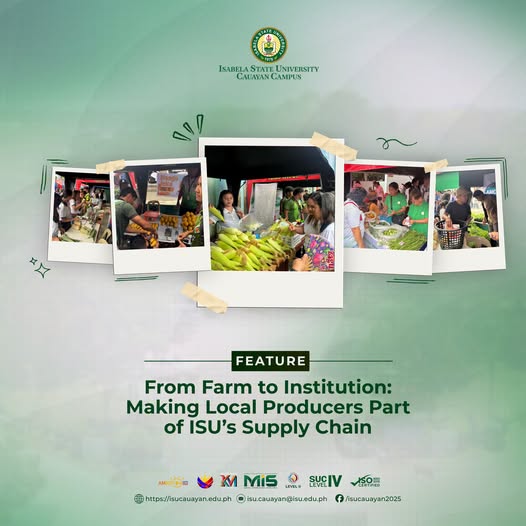
This connection was visible in an agricultural enterprise showcase where several agri-entrepreneurs and farmer groups mounted stalls featuring fresh produce, planting materials, and value-added products. Participating partners included Villa Florenda Farm Resort, led by Mr. Emil Viktor B. Subillaga; Jerry D’ Agri Integrated Farm, under Mr. Jerry Mar Rafael; Allied Botanical Corporation, represented by Mr. Arvin Jay Narciso; Valley Nursery and Amore Farm, managed by Mr. Ricky Valdez; Aurora Vegetable Growers Association, headed by Ms. Australia R. Andrea; Flow of Pariir, Saranay, Cabatuan, Isabela, operated by Ms. Riza M. Cordoso; and 4H Club Aurora, led by Mr. Benedick Calderon.
Their participation illustrated the diversity of local agricultural enterprises, from growers and farm-based businesses to organizations representing vegetable producers. The products on display also offered practical examples of what local agricultural communities can contribute: fresh food for consumption, planting materials for cultivation, and processed or value-added goods that extend the market potential of agricultural harvests.
Beyond showcasing products, such activities create opportunities for producers to connect with potential institutional buyers. For a university with food service operations and regular procurement requirements, these connections can help identify nearby suppliers, assess available products, and explore arrangements that meet the institution’s standards for quality, quantity, price, and timely delivery.
Importantly, this direction is supported by national policy. Republic Act No. 11321, or the Sagip Saka Act, provides for the direct purchase of agricultural and fishery products from accredited farmers’ and fisherfolk’s cooperatives and enterprises. In 2025, Executive Order No. 101 directed national government agencies and instrumentalities, including state universities and colleges, to fully implement the law. It further directs these institutions to ensure that rice and other agricultural and fishery products served in government events, food service areas, and canteens are directly purchased from accredited farmers’ and fisherfolk’s enterprises, subject to applicable procurement rules.
The Government Procurement Policy Board also approved dedicated Sagip Saka procurement guidelines in September 2025. These guidelines clarify the procedures for direct procurement, including supplier accreditation, documentary requirements, and fair pricing mechanisms. Under this framework, local farmers and organized producer groups have a formal pathway to become government suppliers rather than relying solely on informal market access.
For ISU, the presence of local agricultural enterprises at university activities provides a starting point for developing these relationships. The next step is to translate market connections into regular procurement opportunities. This may include identifying qualified local suppliers, determining which agricultural products are needed by campus offices and food service facilities, and coordinating with accredited farmers’ groups that can meet institutional requirements.
Supporting local producers does not mean setting aside quality, transparency, or responsible use of public funds. Rather, it means recognizing that procurement can serve both institutional needs and broader economic objectives. When locally produced goods meet the required standards and offer competitive value, purchasing them can help sustain small enterprises, expand market access for farmers, and strengthen the province’s agricultural value chain.
A university is not only a consumer of goods; it is also a significant participant in the economy around it.