ISU signs MOA with partners for water resource management, agricultural innovation
Monday, September 15, 2025
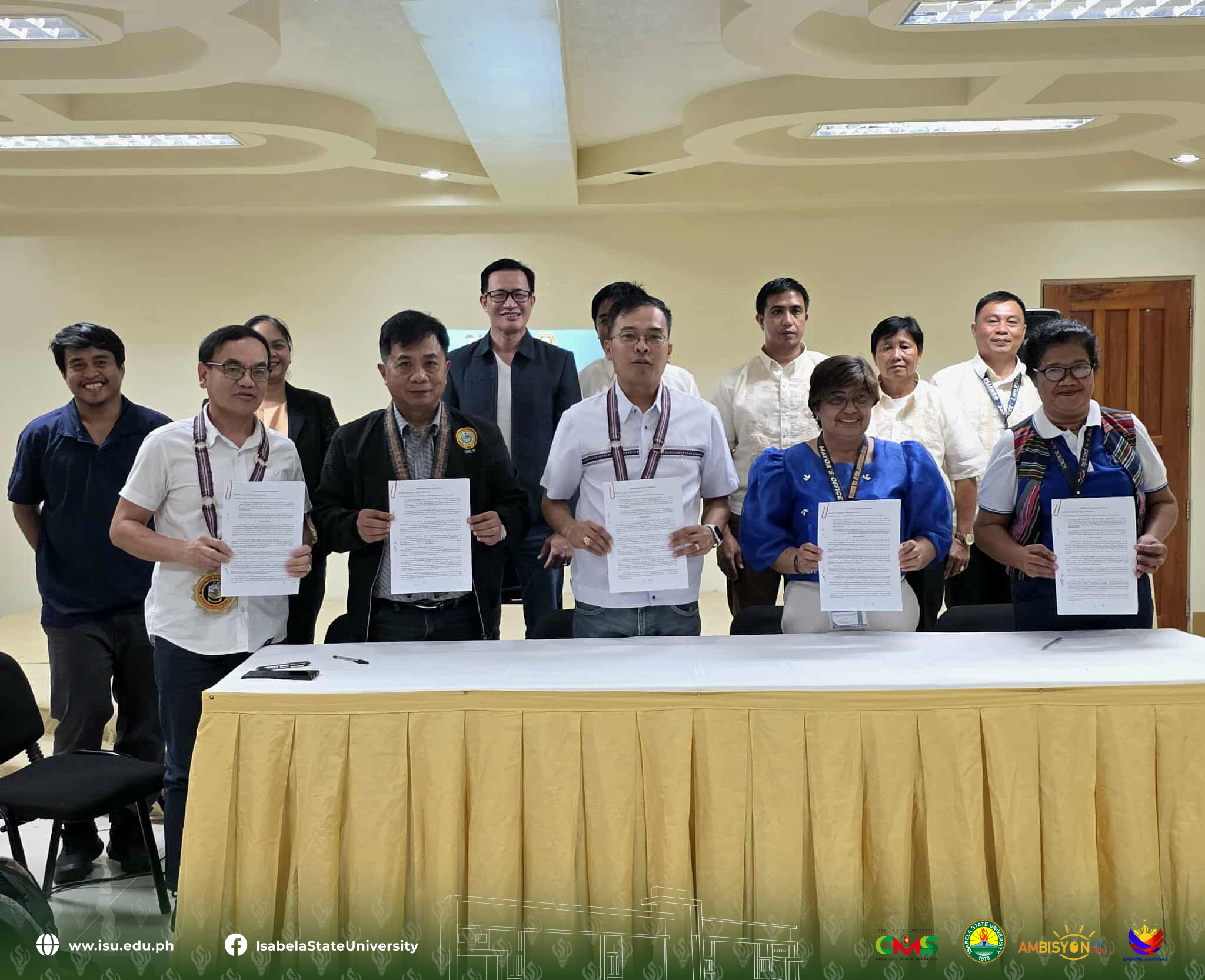
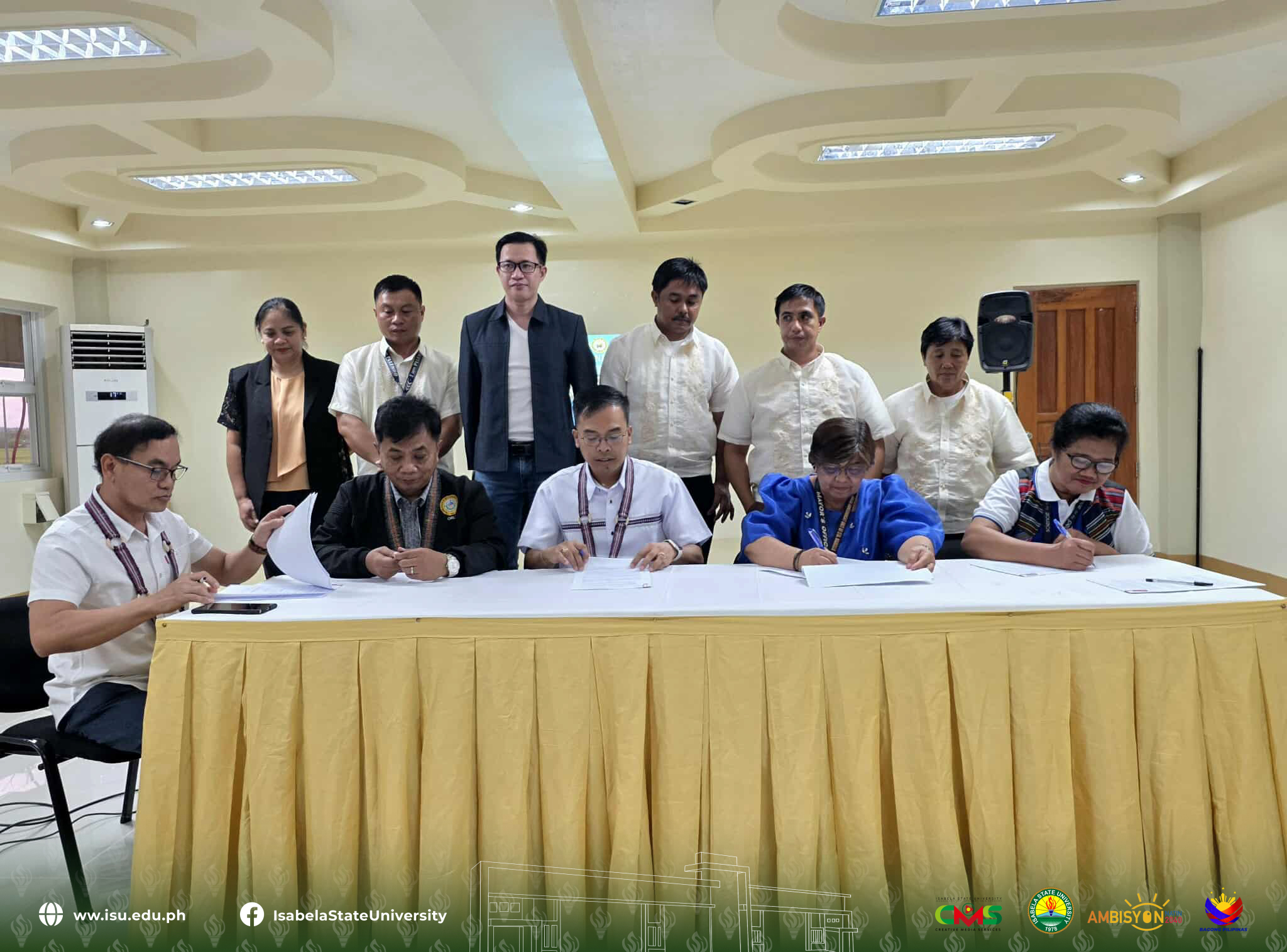
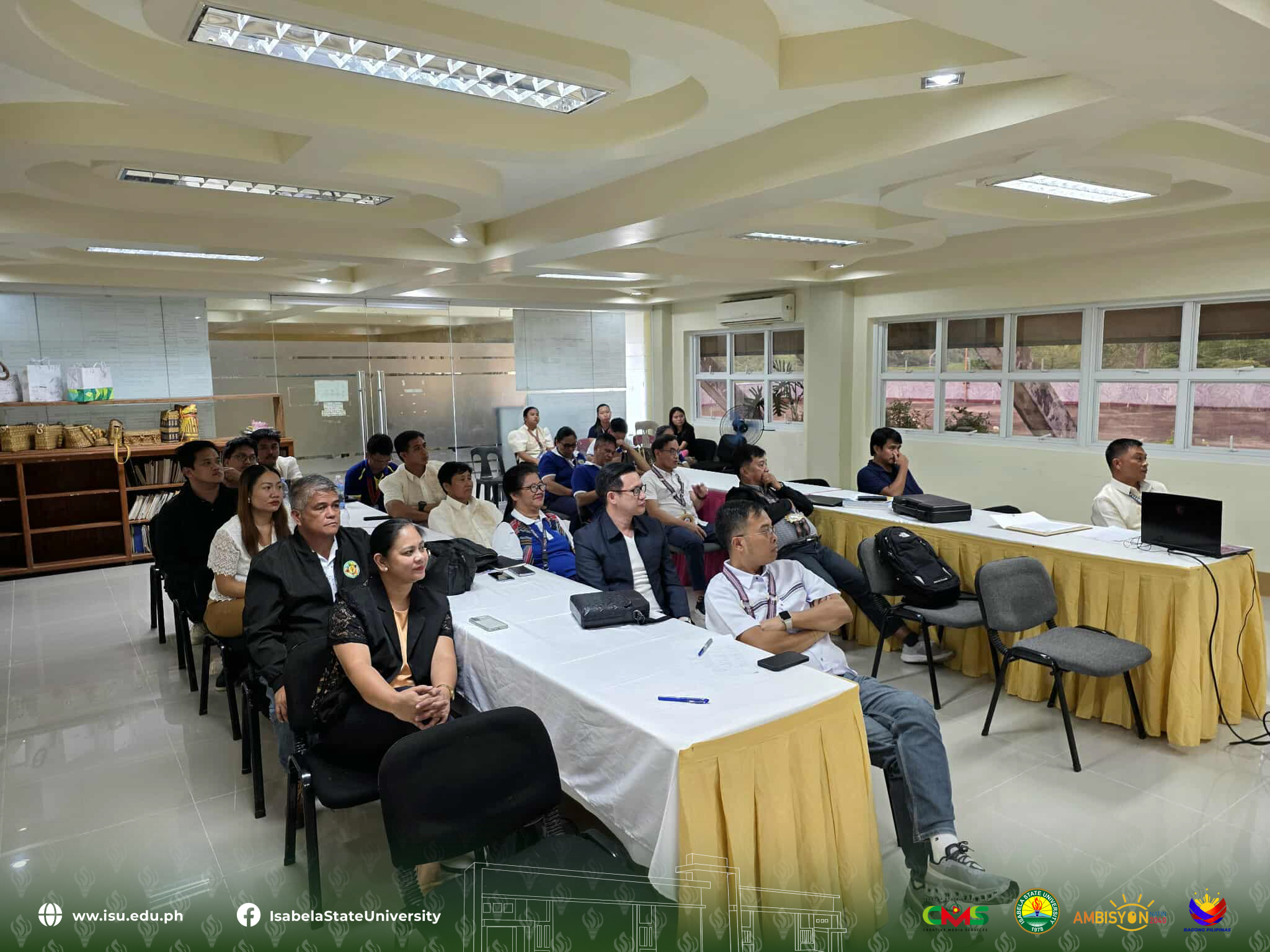
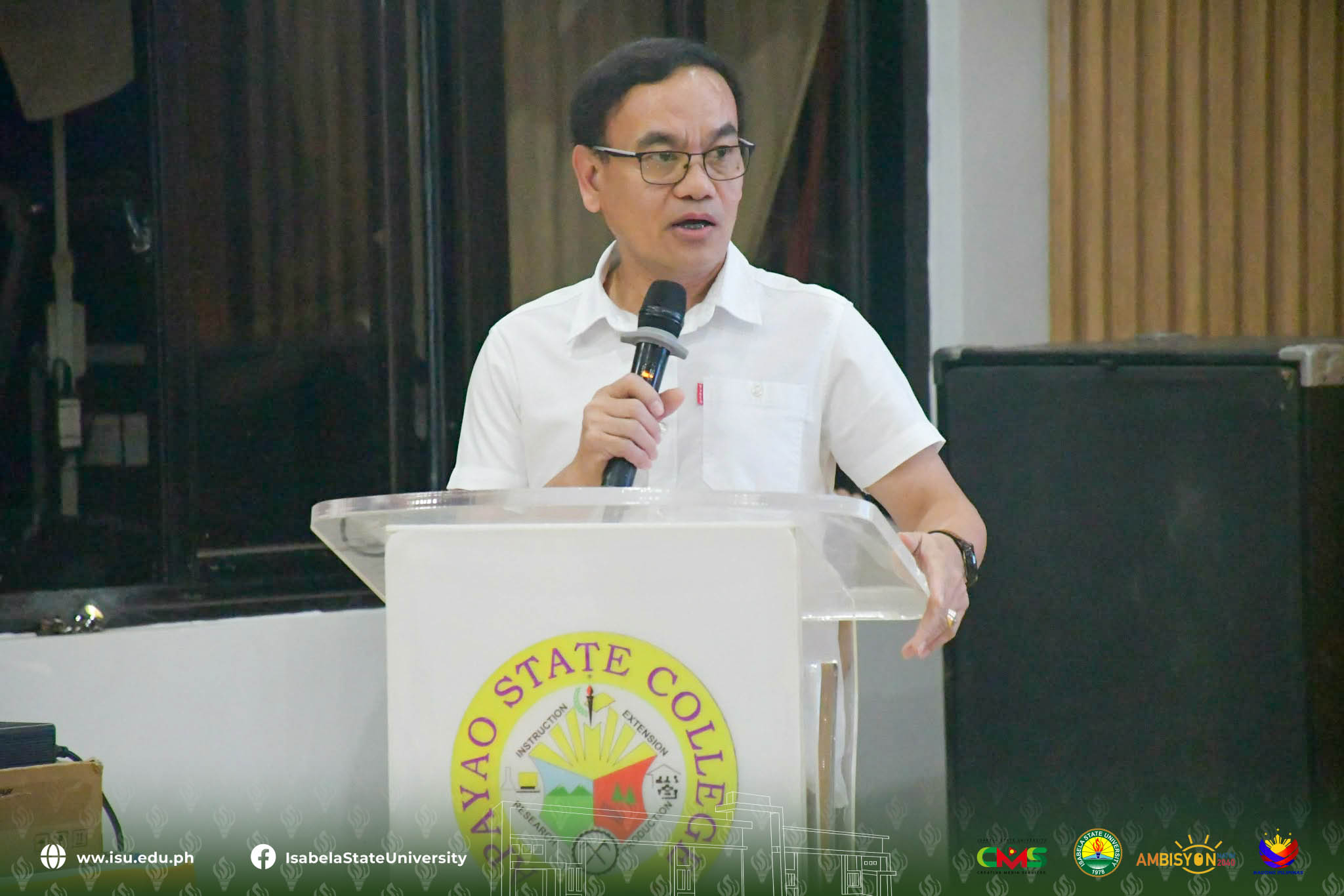
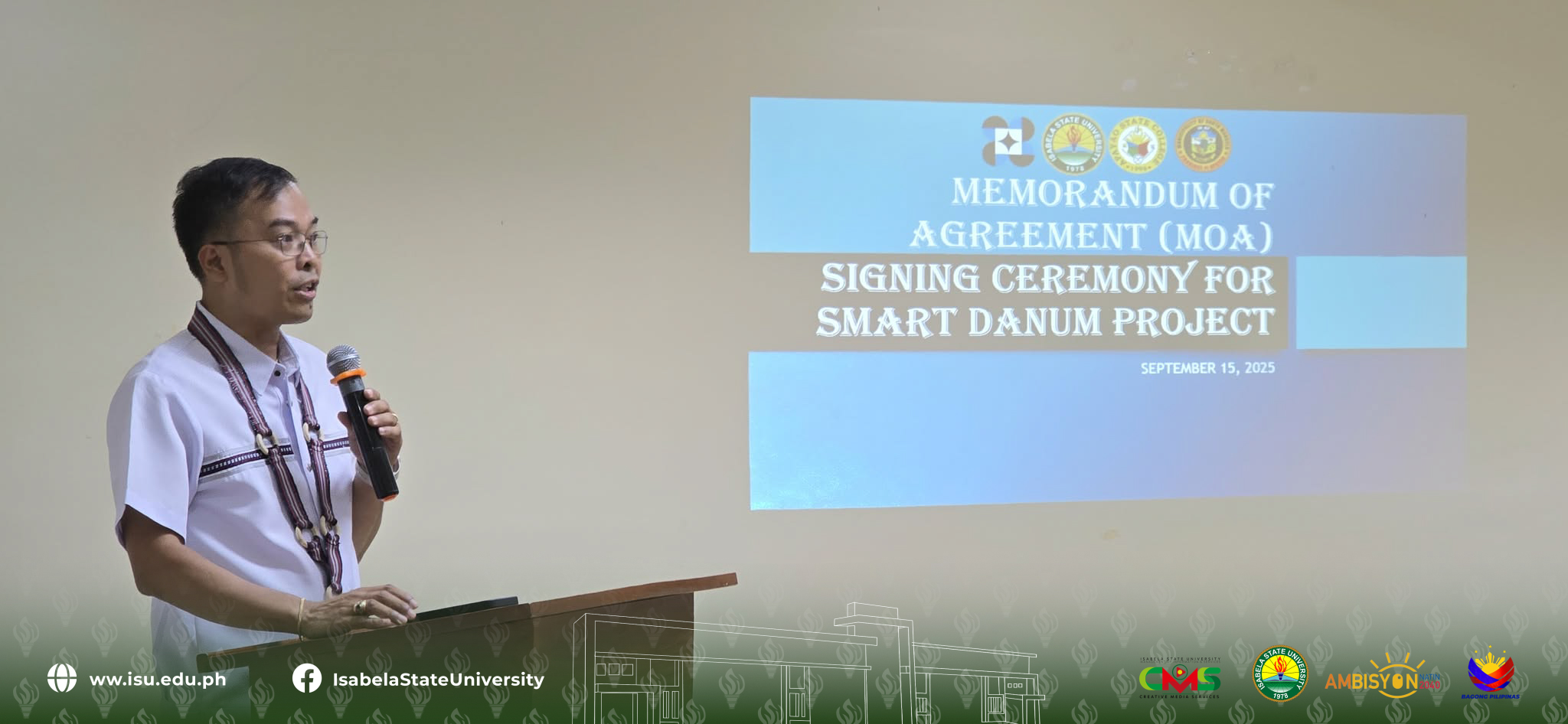
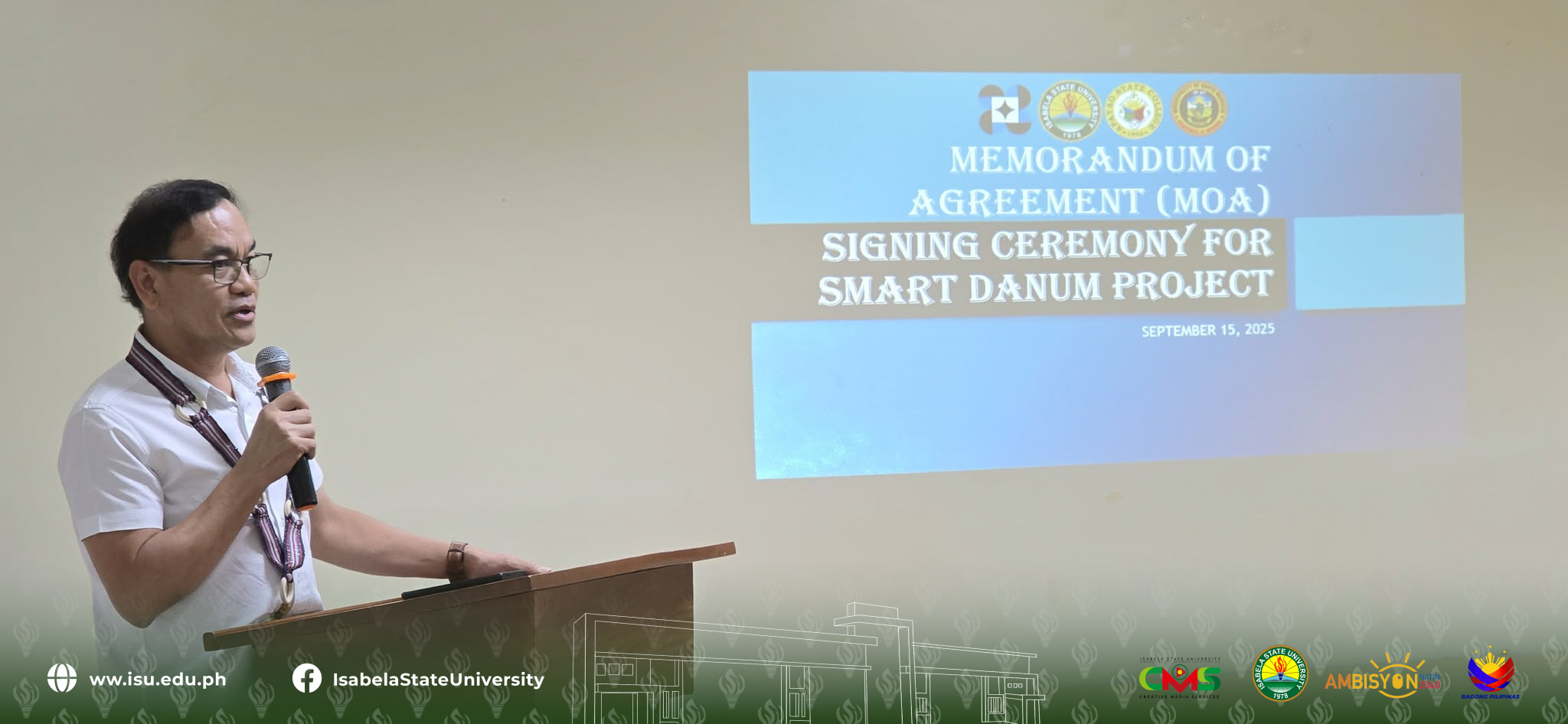
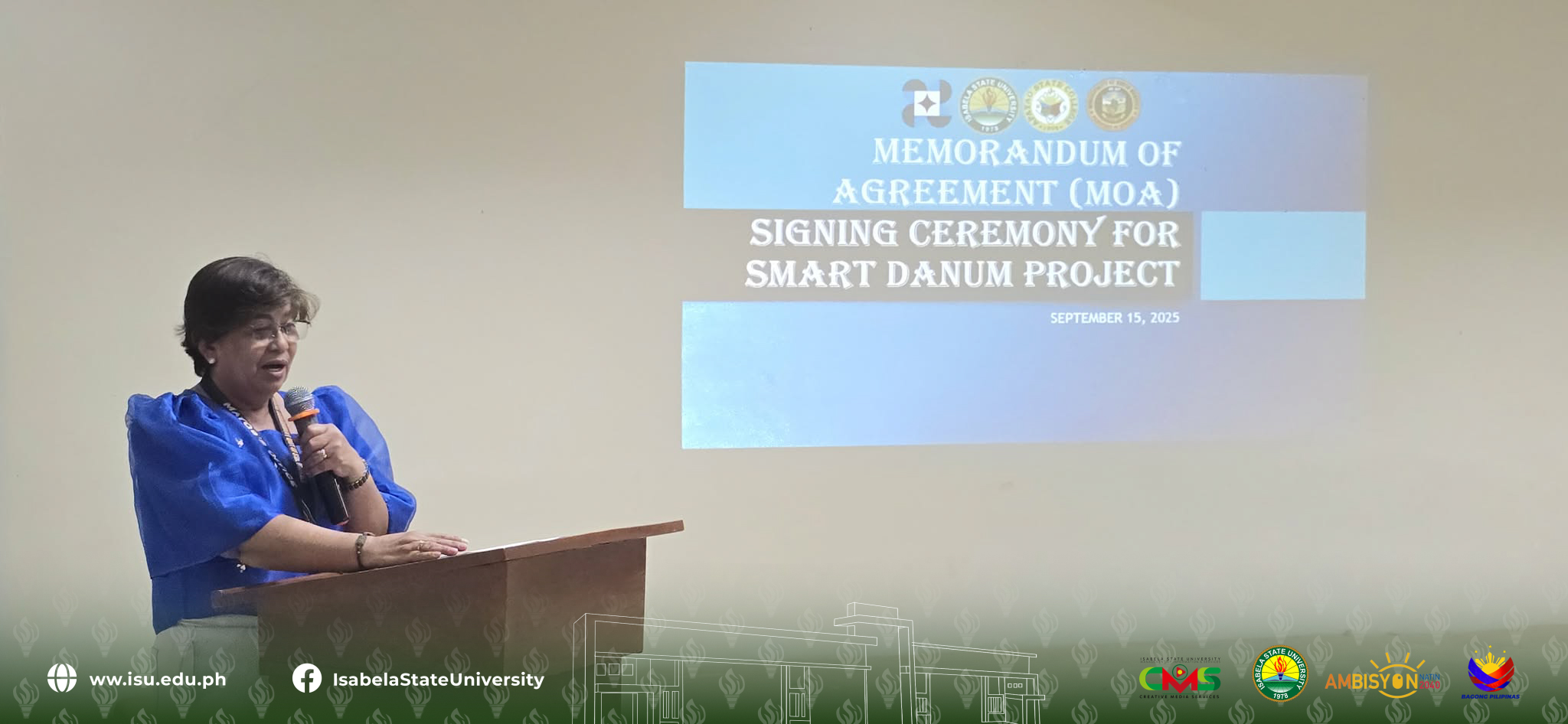
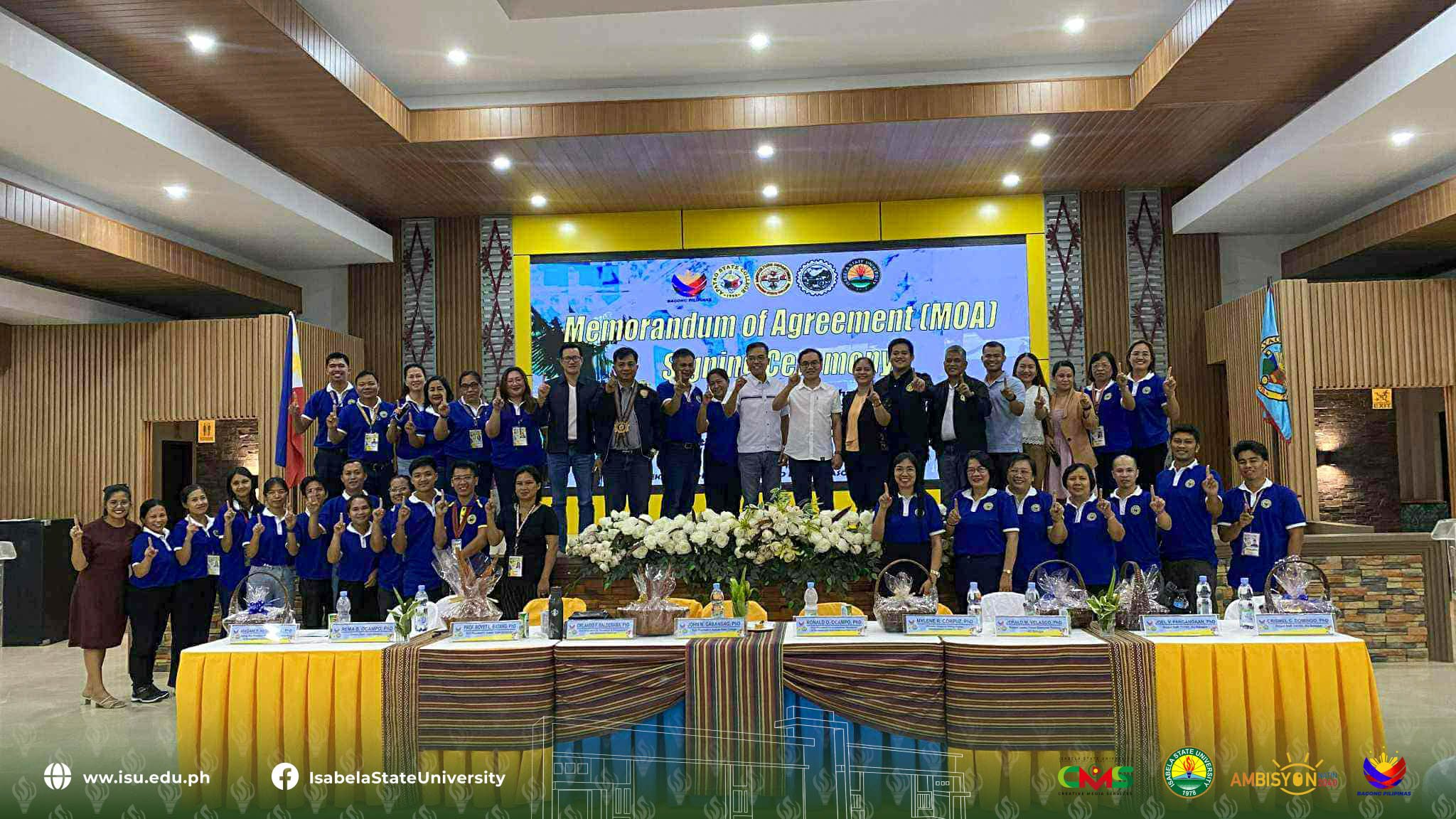
On September 15, Isabela State University (ISU) signed Memoranda of Agreements (MOA) with the Local Government Unit (LGU) of Santa Marcela and Apayao State College (ASC).
The University was represented by Dr. Boyet L. Batang (University President), Dr. Orlando F. Balderama (Vice President for Research and Development, Extension and Training), Dr. Isagani P. Angeles, Jr. (Vice President for Planning and Development), and Dr. Mylene R. Corpuz (Center Director, Cagayan Valley Cacao Development Center).
The MOA with LGU Santa Marcela, also in partnership with the Department of Science and Technology – Apayao (DOST Apayao) and ASC, focused on the implementation of the Smart Decision Support Tool in the Assessment and Management of Water Resources of LGU Santa Marcela (SMART DANUM).
Through the signed MOA, the University shall provide its services and perform its obligations to reach the following objectives: assess and analyze the water quality in the 13 barangays of Santa Marcela, create a comprehensive water resource management plan with forecasting and action strategies, and implement a locally developed water treatment technology to address identified water quality issues.
In addition, ISU also signed two (2) MOAs with ASC and covered the following:
Strengthening Institutional Linkages through Knowledge and Institutional Transfer in Academic, Research and Extension Programs
Establishing Collaborative Partnership on the Adoption and Transfer of Cacao Production and Processing Technologies
The first MOA affirmed the joint commitment of both institutions to enrich faculty expertise through adjunct appointments, foster collaborative research on regional and national concerns, strengthen knowledge and technology transfer, and broaden extension initiatives that uplift communities.
On the other hand, the second MOA reflected the common vision of driving agricultural innovation by improving cacao production and processing technologies, thereby supporting both academic advancement and sustainable livelihood opportunities for local farmers and partner communities.
Through these collaborative endeavors, ISU and its partners stand to benefit from the sharing of resources, the expansion of research opportunities, the enhancement of instructional capabilities, and the strengthening of industry and community linkages.
Moreover, these partnerships shall serve as a bridge for translating knowledge into solutions that can improve the quality of life through partnerships toward advancing education, research, and sustainable development.