
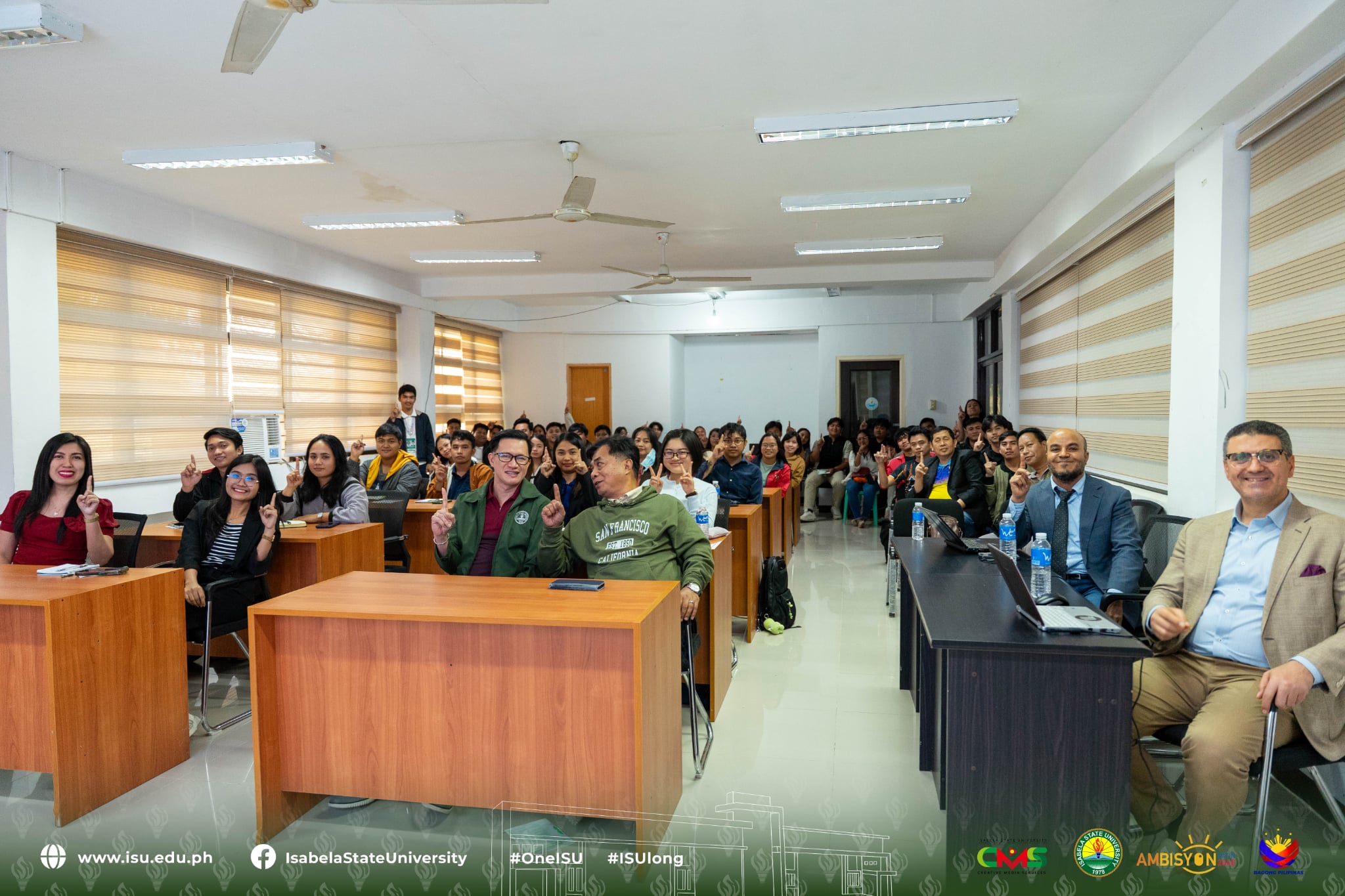
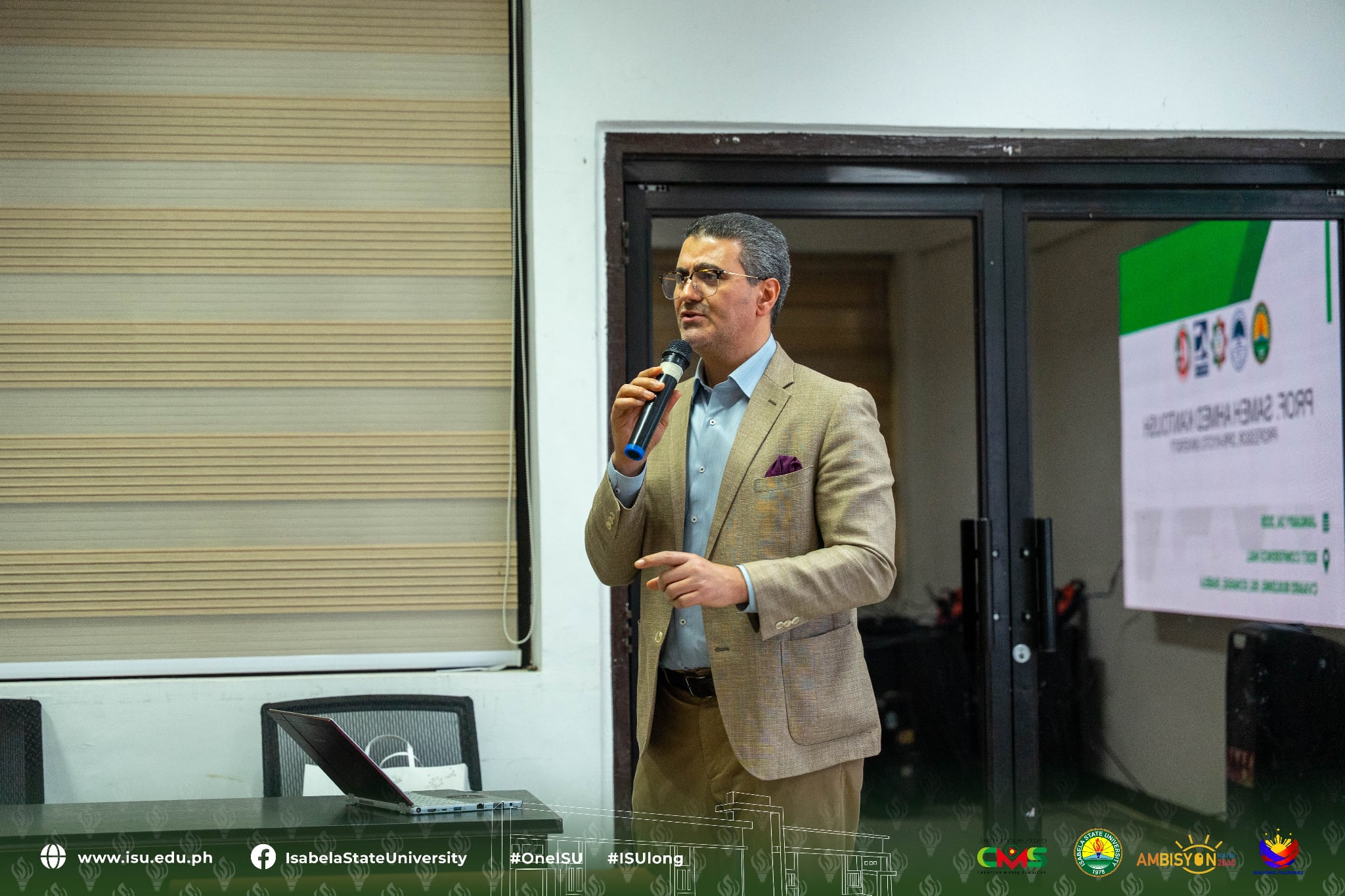
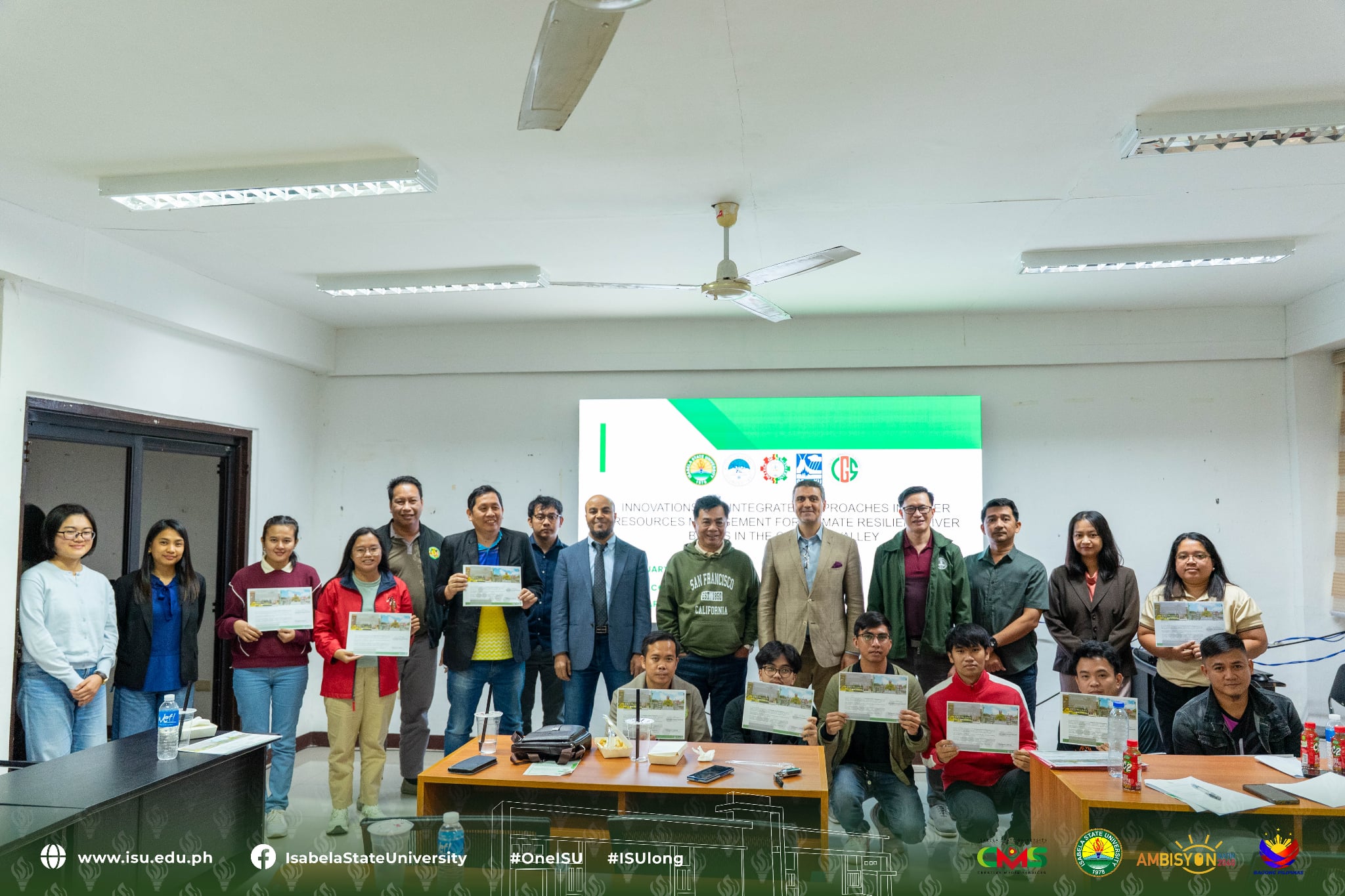
The Isabela State University unswervingly designs global learning platforms to engage its students with renowned experts and researchers, as it organized a Graduate School Colloquium themed “Innovations and Integrated Approaches in Water Resources Management for Climate-Resilient River Basins in the Cagayan Valley” on January 24, 2026, at the RDET Hall, CVAARRD Building of the University. The strong network of the University with Japanese experts and other member states in the ASEAN region, particularly the R&D initiatives of ISU’s top executives, Prof. Dr. Boyet L. Batang (University President), Prof. Dr. Orlando F. Balderama (Vice President for Research and Development, Extension and Training), Prof. Dr. Isagani P. Angeles Jr. (Vice President for Planning and Development), Prof. Dr. Jeoffrey Lloyd R. Bareng (University R&D Director), and Prof. Dr. Lanie A. Alejo (SWIM R&D Center Director) paved the way for ISU to become a trailblazer of Integrated Water Resources Management (IWRM) in the Philippines. The Japanese delegations, spearheaded by Prof. Dr. Sameh Ahmed Kantoush, Professor of Kyoto University, provided a specialized lecture series revolving around the application of data analytics and artificial intelligence in flood and river basin management to students from graduate programs such as Master of Science in Agricultural and Biosystems Engineering, Master in Information Technology, and Master of Science in Fisheries.
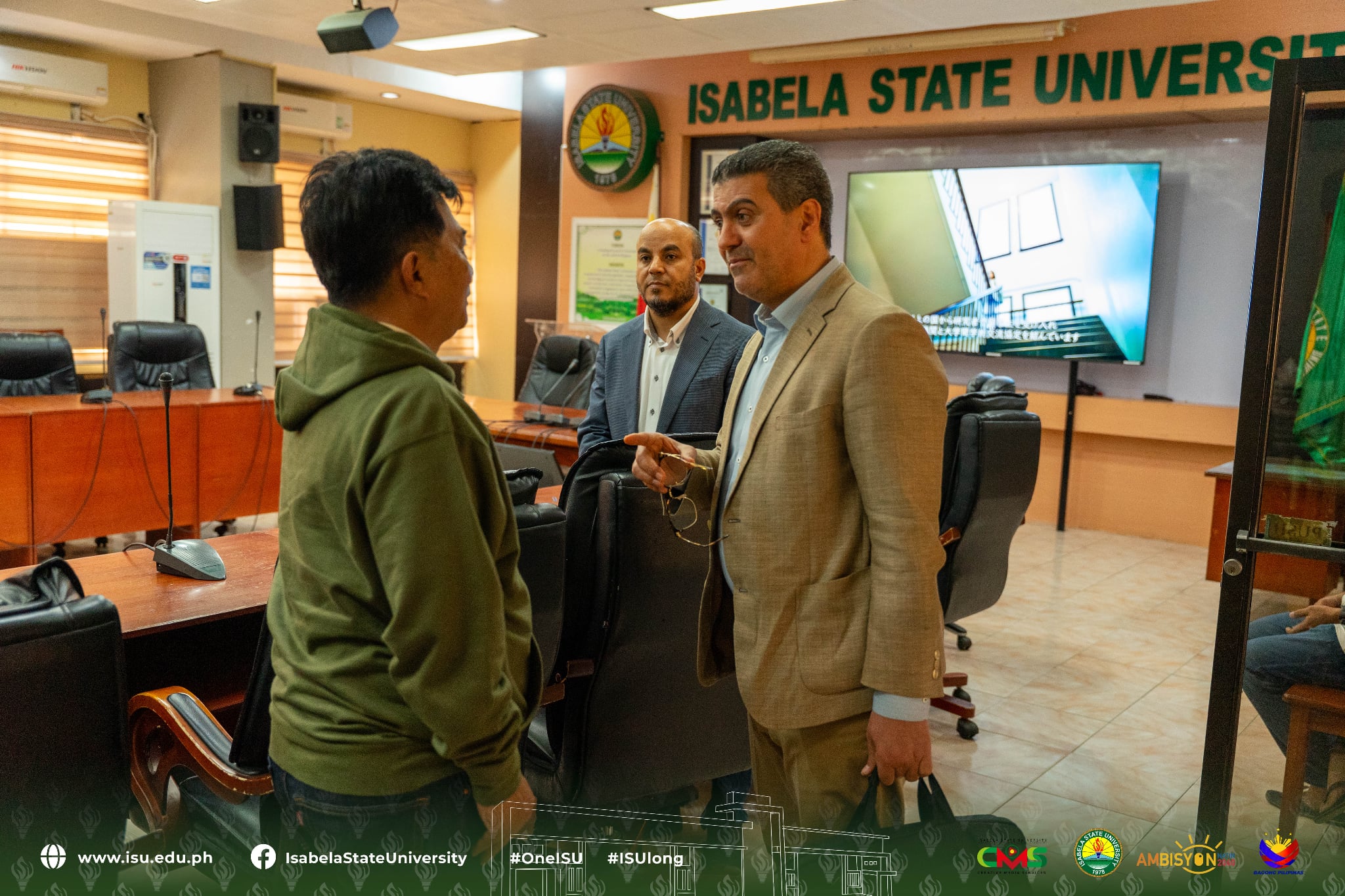
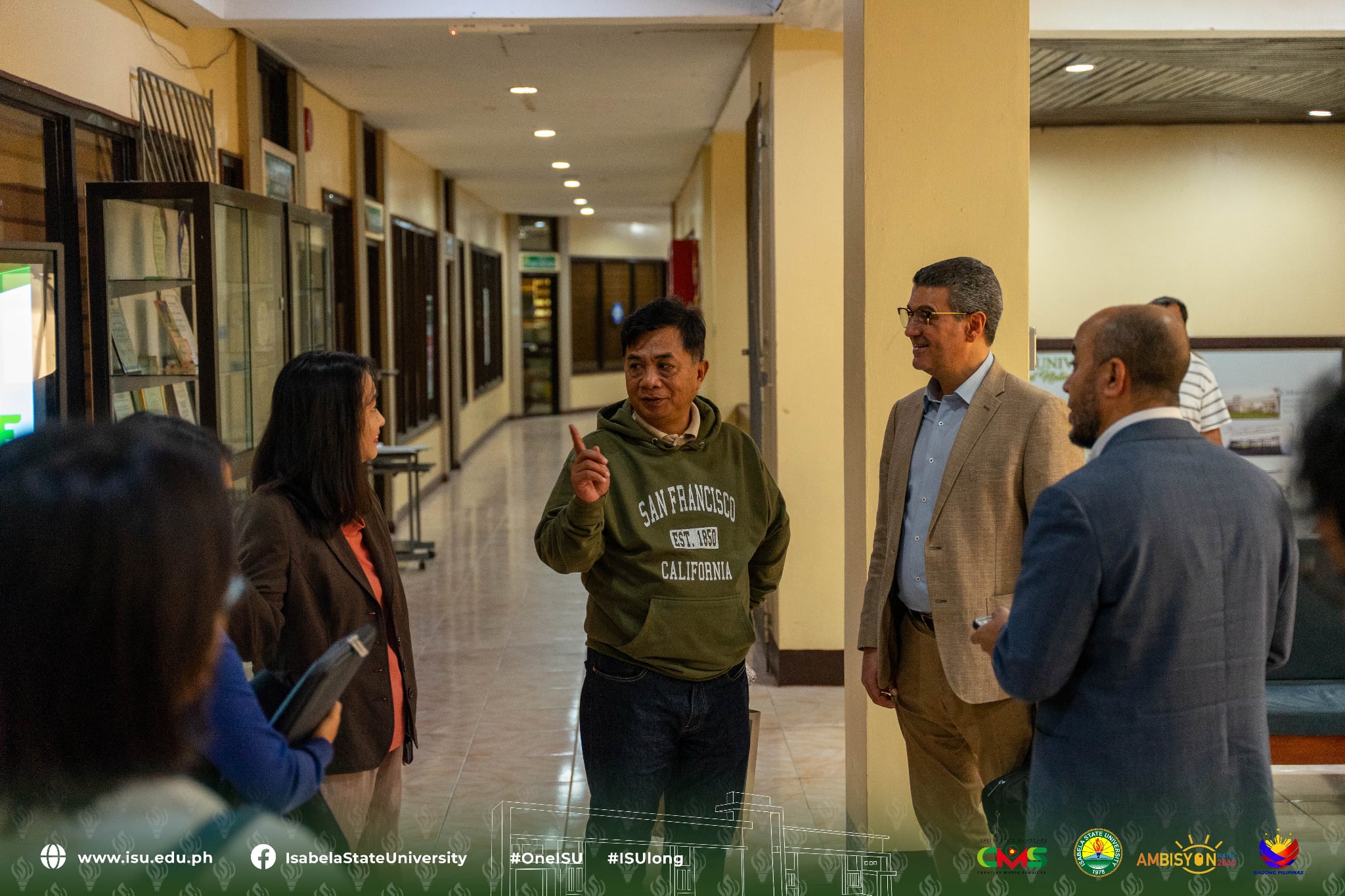
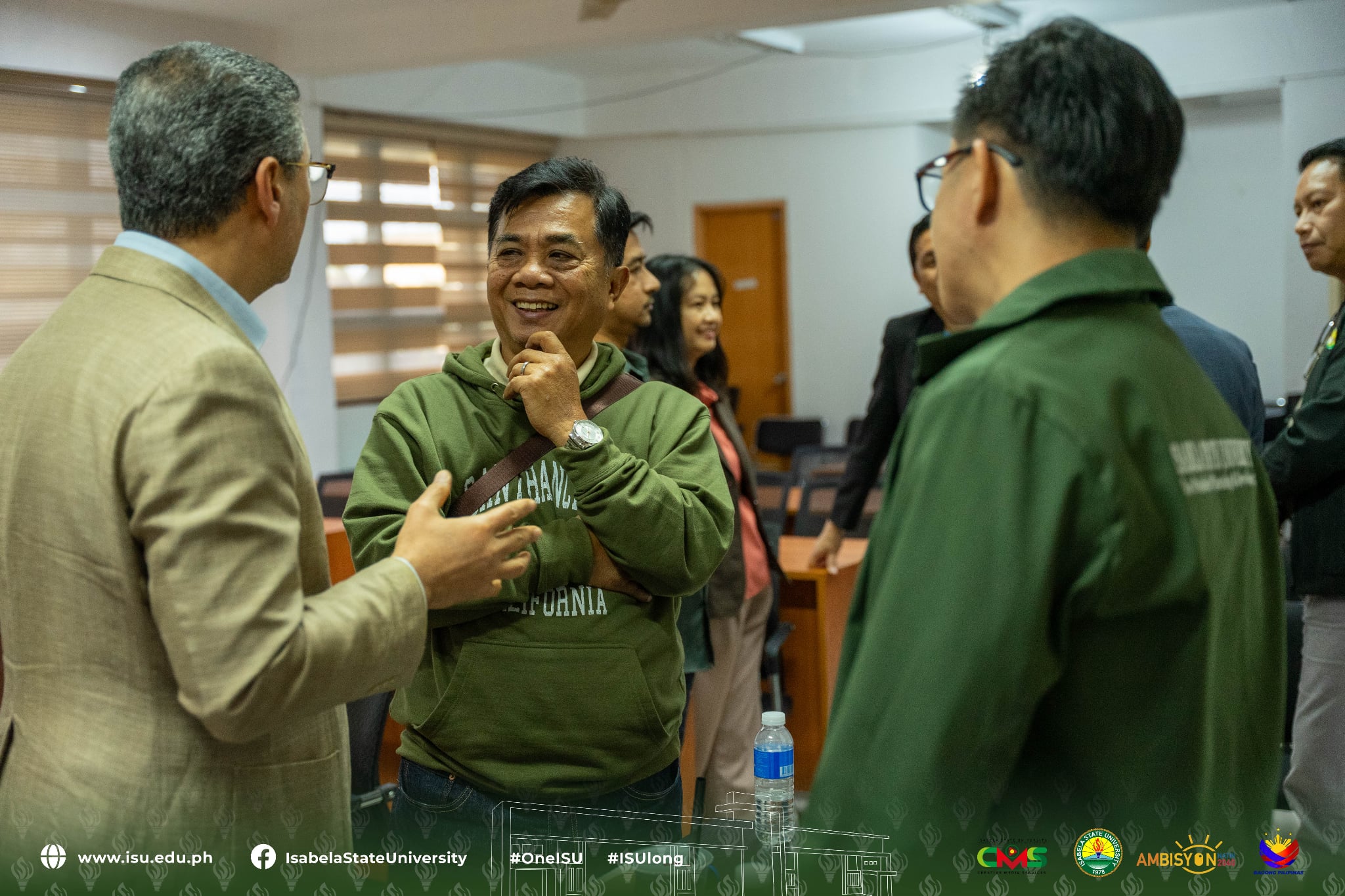
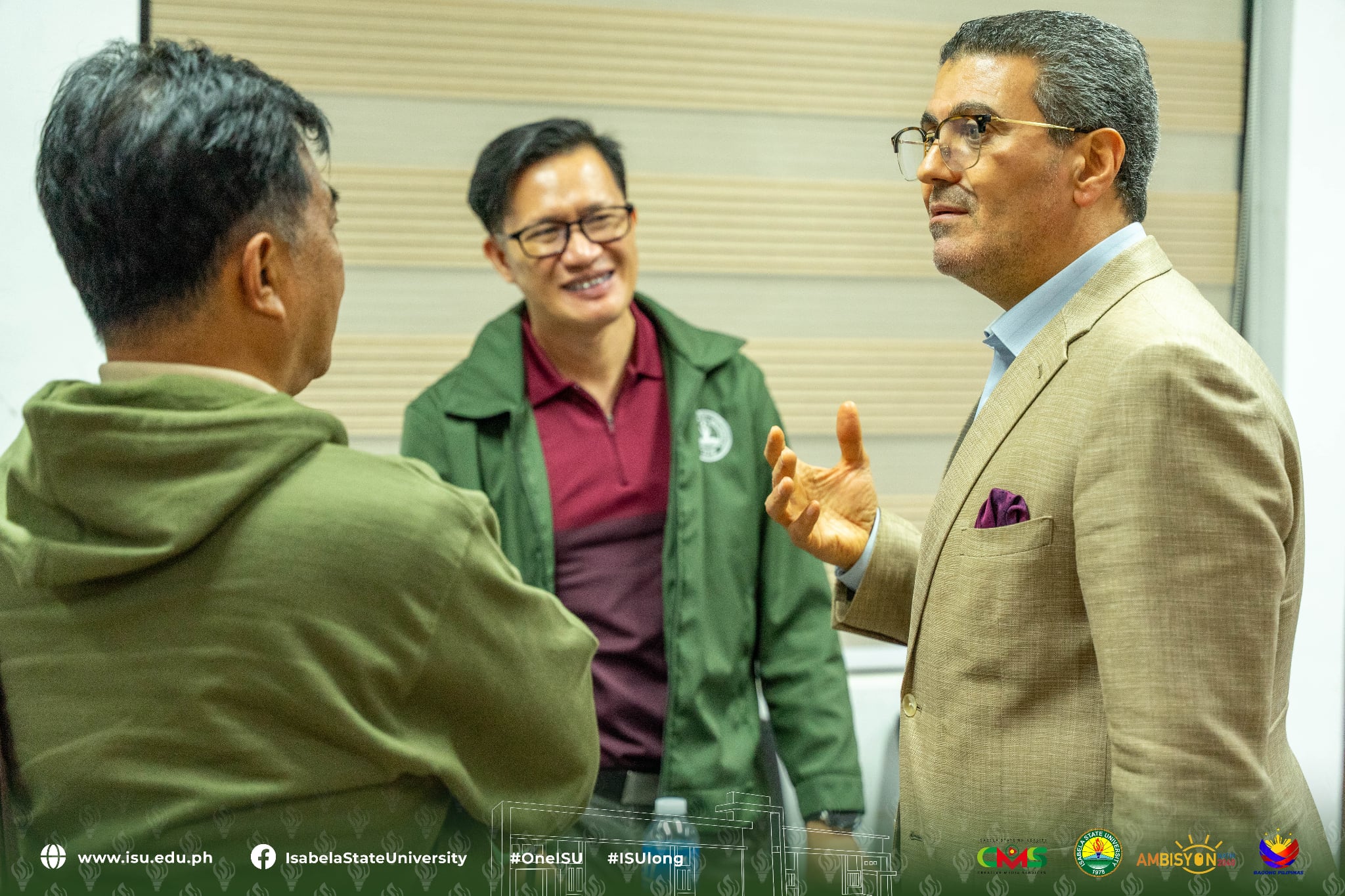
In his opening and welcome remarks, Prof. Balderama encouraged the active participation of the graduate students and to take full advantage of the University’s international ties with prominent scholars in identifying research gaps and enriching their research interests. To complement this, Prof. Kantoush also shared, “You need motivation, confidence in yourself, and a clear focus on what you want to do in relation to building your research area through a systematic learning process”. Moreover, he essentially oriented them on the fundamental concepts of river basin management; sample watersheds in the world; features, challenges, and drivers of smart river basin monitoring systems; the importance of integrated river basin management; and impacts of interbasin water transfers.
As the technical lecture series began, Engr. Czarimah S. Valdez, ISU faculty and PhD student at Kyoto University, discussed the topic titled “Sustainable Water Resources Management in River Basin: Basin-Scale Adaptation Strategies and International Perspectives”. She shared her various learnings from Japan and Vietnam on basin vulnerabilities, data-driven management, and monitoring systems, thereby highlighting the importance of local government participation in effective water resource management. On the other hand, Dr. Mohamed Saber Mohamed Sayed Ahmed, Associate Professor at Kyoto University, delivered a talk on “Data Analytics and Artificial Intelligence (AI) Applications for Flood Prediction, Monitoring, Mitigation, and Management in River Basins”. Specifically, he explicated the definition of AI, machine learning (ML), AI and ML learning applications and real-life examples as supervised learning tools, comparison between ML and hydrological models, Rainfall-Runoff-Inundation (RRI) model, use of ML for flood depth prediction, flood inventory map and influencing factors, and a cutting-edge web-based flood hazard mapping for Japan and Philippines to provide a scientific basis for informed planning and proactive flood risk reduction strategies.
Furthermore, Engr. Jerome G. Gacu, a faculty member of Romblon State University and PhD student at Kyoto University, explained the topic titled “From Vietnam’s Flood Crisis to a Smarter Future for the Cagayan River Basin: Post-Flood Survey Insights and Local Applications”. He shared his post-flood survey findings and flood risk pattern comparison between Vietnam and the Philippines, particularly highlighting Vietnam’s intelligent operation center, real-time monitoring technologies for communities and decision-makers, and smart governance and community resilience, which could be adapted to the Philippine context to enable timely, informed decisions and strengthen disaster response and management strategies in the country.
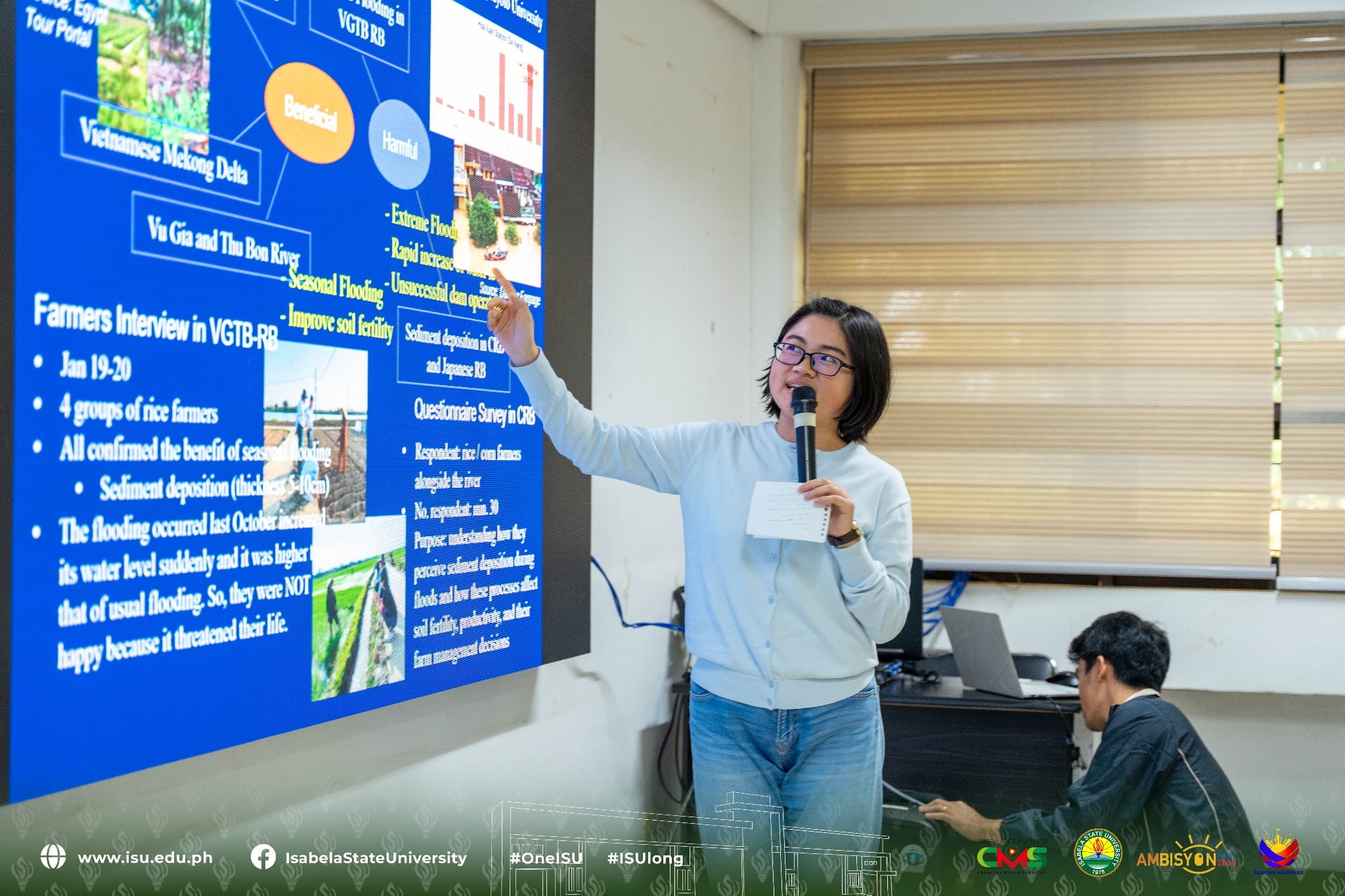
Moreover, Engr. Miki Yamai, MS student at Kyoto University, also explained the topic titled “Effects of River Water Quality on Farmland: A Comparative Study of Flood Impacts in Japan, the Philippines, and Vietnam”. She distinguished the beneficial and harmful effects of flooding on agricultural lands and underscored the essence of valuable experience through field surveys to observe real-world flood scenarios across different countries. Afterward, Prof. Balderama synthesized the shared IWRM practices connecting it with science, governance, and stakeholder participation through his discussion on “Integrated Water Resources Management Models for River Basins and Communities.” He particularly underlined various IWRM concepts, priority challenges in IWRM, and conflict management in Cagayan River Basin, and featured the University’s innovative and IWRM-focused R&D projects from crafting Comprehensive Water Resources Management Plans for Cagayan Valley region to numerous community engagements, scientific outputs, actionable policies, science, technology, and innovation (STI)-driven research project proposals, and the WISER R&D operational framework.
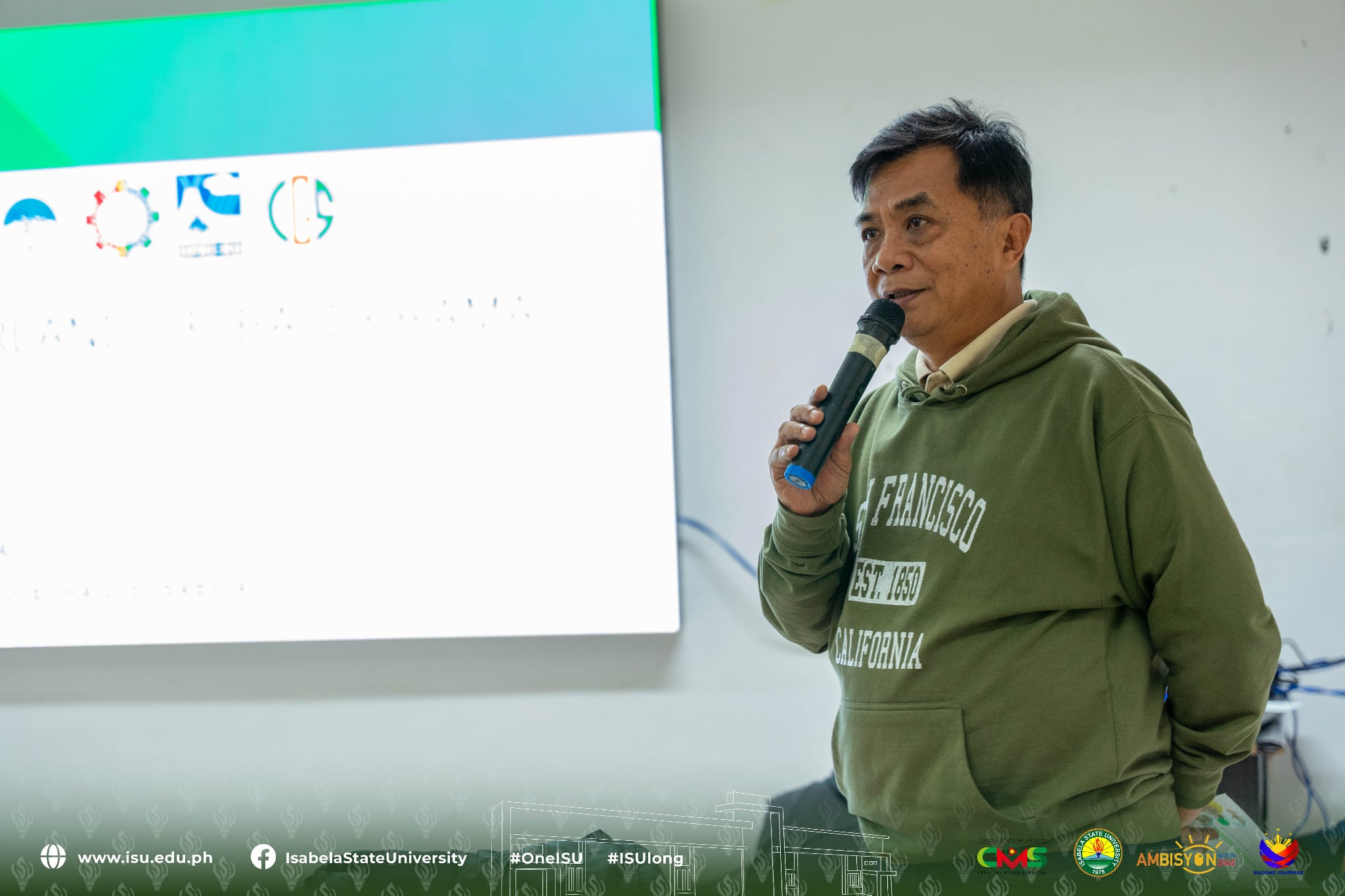
In addition, the open forum phase of the colloquium foregrounded the academic interaction and information exchange among the graduate students, faculty, and prominent figures in IWRM as resource speakers. The dialogue sparked the curiosity of the academic community on the technological aspect of the lectures presented, particularly on AI applications and the use of physical modeling in flood prediction and science-based software applications as effective flood mitigation measures.
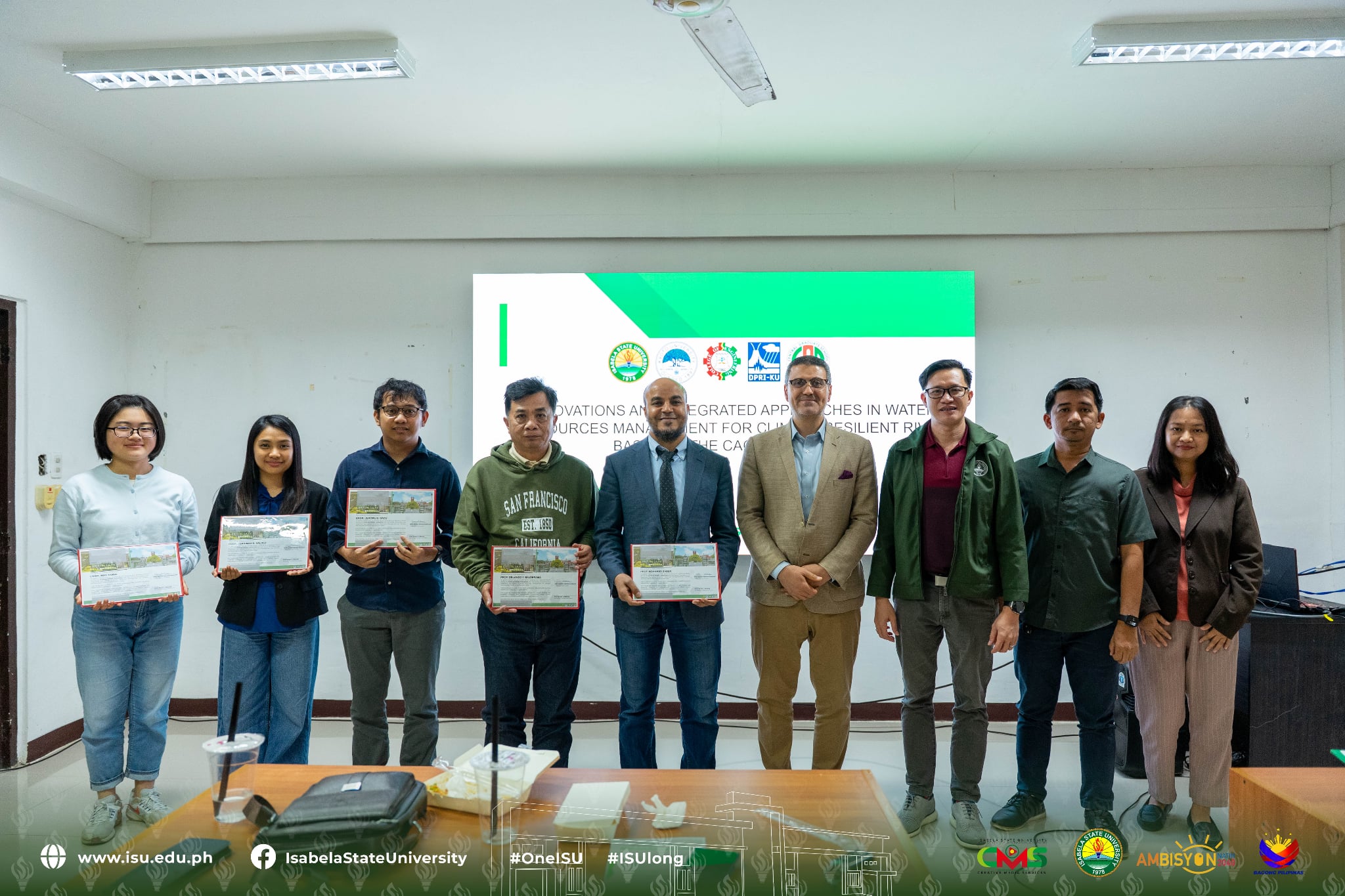
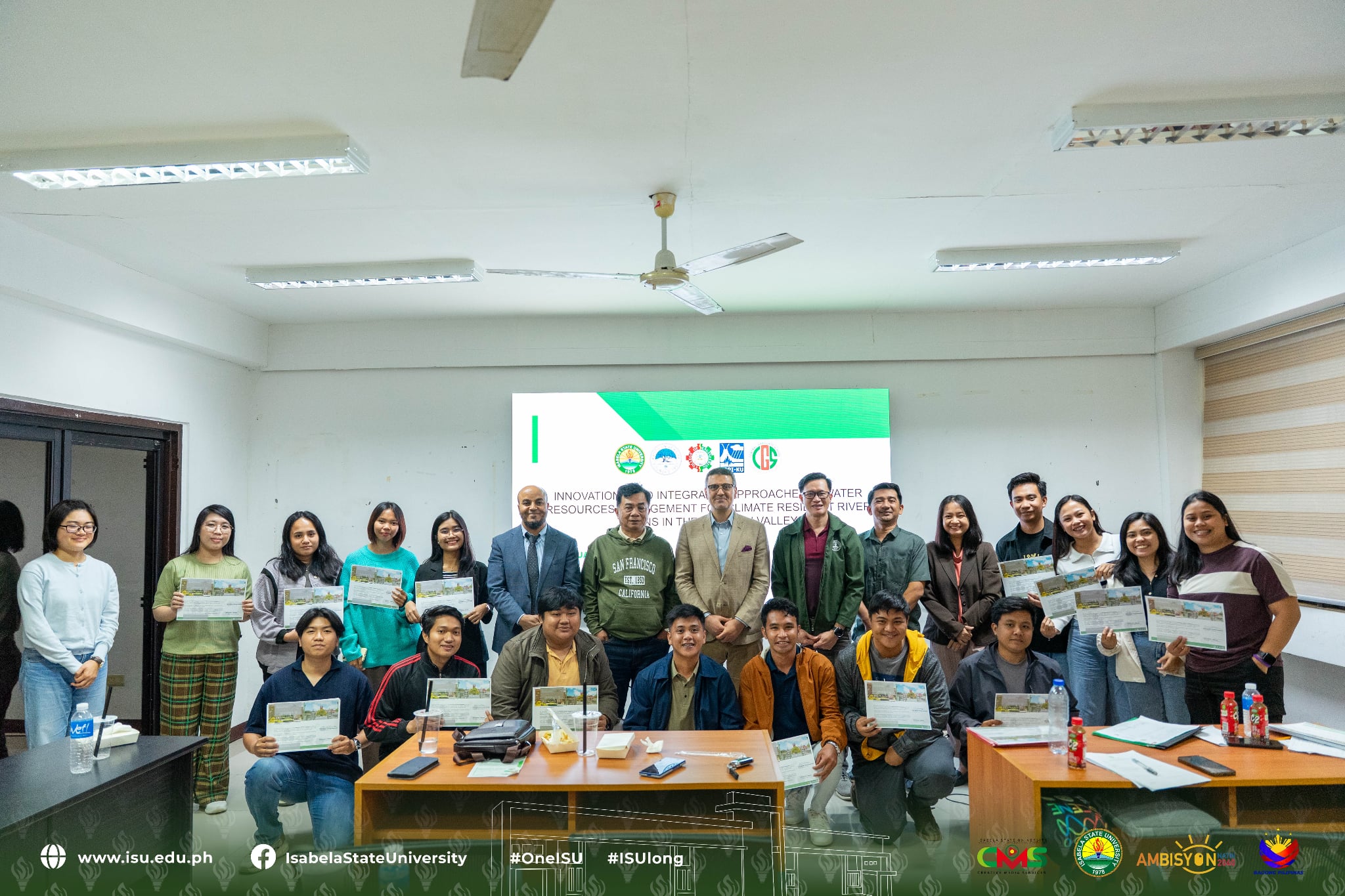
Lastly, Prof. Bareng concluded the event by expressing his appreciation for the active participation of the graduate students and faculty members, the immense support of the ISU top management for continuously creating various learning opportunities for all institutional stakeholders, and the unwavering and invaluable contribution of the University’s international partners from Japan. With this global learning platform that the University designs, its graduate students and faculty members are empowered to navigate research areas in their field of expertise and strengthen their academic and professional competencies, thereby setting the stage for ISU to raise its banner as a modern, smart-green university with a global reputation for positive societal transformation.
Content and Image Credits: River Basins for Sustainable Development