ISU holds GAD laws, policies orientation for newly-hired faculty, staff
Friday, September 19, 2025
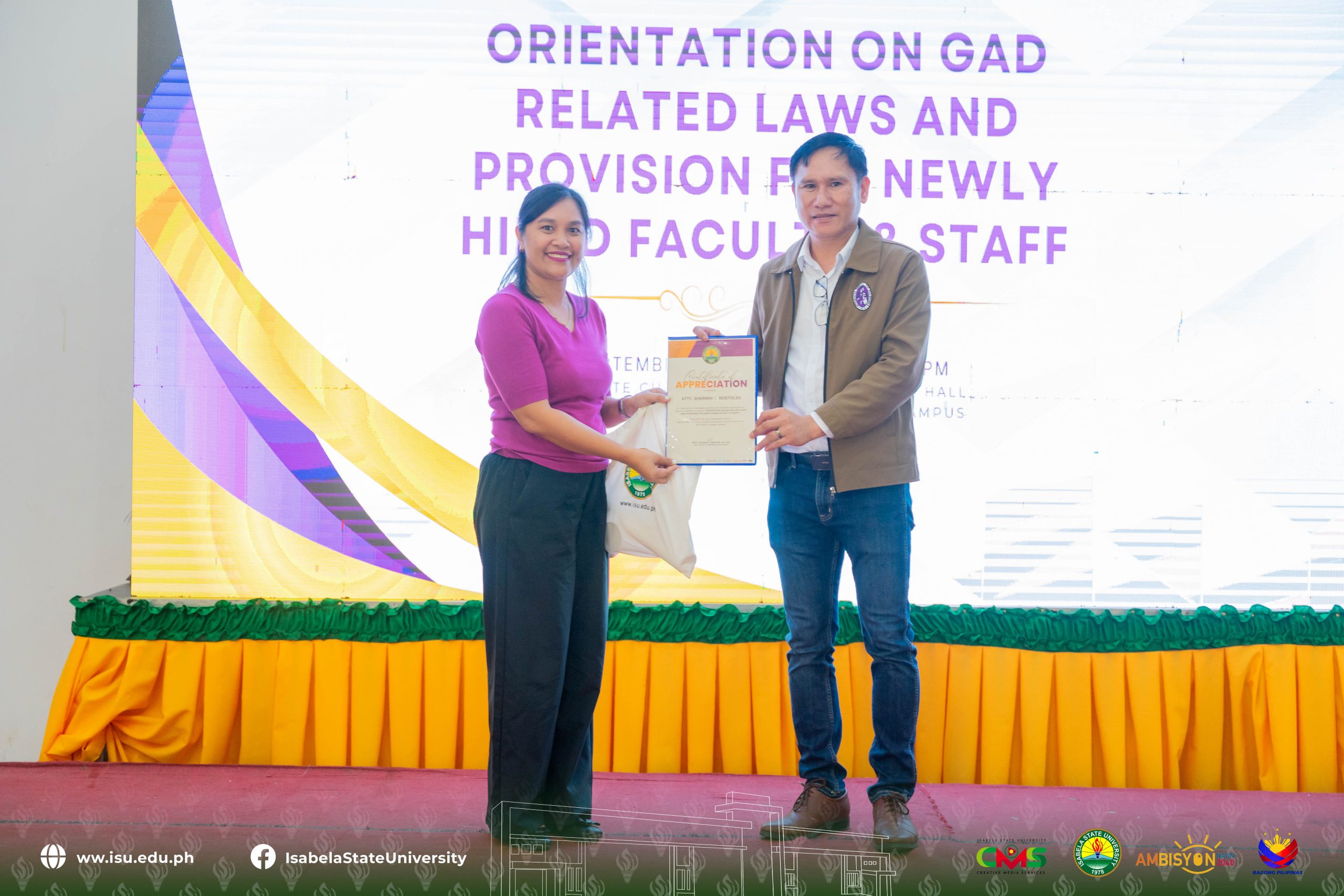
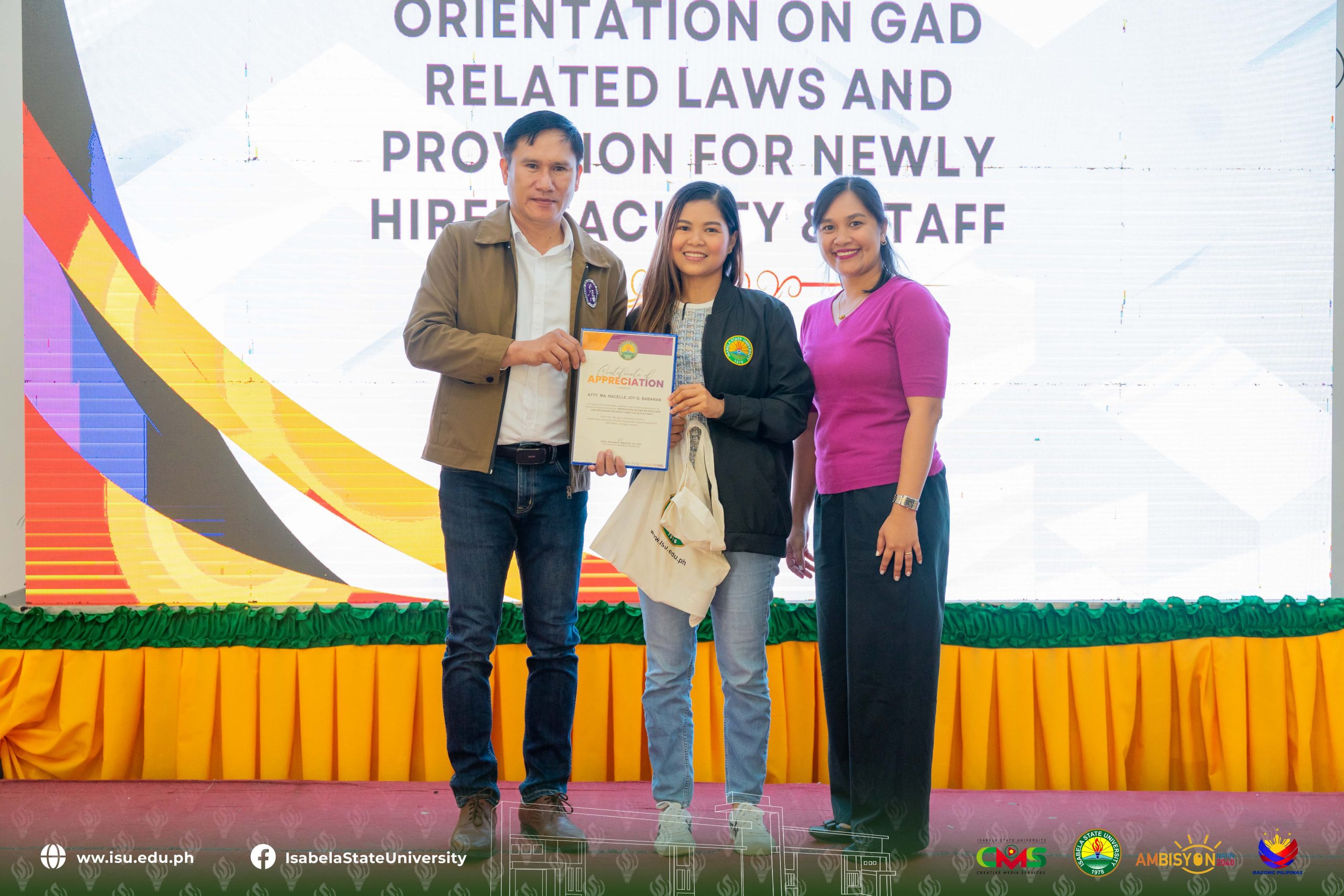
Isabela State University (ISU) strengthened its commitment to gender equality and inclusivity by holding a Comprehensive GAD Laws and Policies Orientation for Newly-Hired Faculty and Staff on September 19 at the Climate Change Center R&D Support Facility Hall. The event was spearheaded by the University Gender and Development (GAD) Office in partnership with the University Legal Department.
The orientation was organized to address the need of familiarizing new personnel with existing GAD laws and policies. By equipping participants with relevant knowledge and skills, the activity aimed to enhance their capability to support ISU’s GAD initiatives, promote a safer and more inclusive workplace, and ensure compliance with national legal requirements.
This initiative also hoped to create a well-informed workforce that upholds gender equality, prevents discrimination and harassment, and contributes to building an academic environment that values personal rights and dignity.
The session covered a range of laws and policies, including:
RA 6713 – Code of Conduct and Ethical Standards for Public Officials and Employees
RA 9710 – The Magna Carta of Women
RA 11313 – The Safe Spaces Act
RA 7877 – Anti-Sexual Harassment Act
Acts of Lasciviousness
RA 9262 – Anti-Violence Against Women and Their Children Act
RA 11210 – 105-Day Expanded Maternity Leave Law
RA 10028 – Expanded Breastfeeding Promotion Act of 2009
RA 11861 – Expanded Solo Parents Welfare Act
With enhanced awareness and understanding of these laws, the participants are expected to be prepared to support affected individuals appropriately, integrate GAD principles in their respective roles, and strengthen the University’s mechanisms for addressing gender-related concerns.
Moreover, this initiative highlights the University’s efforts to institutionalize GAD mandates and strengthen its capacity to prevent and respond to issues of discrimination, harassment, and gender-based violence.
With this orientation, ISU continues to align its internal policies with national directives while promoting inclusivity and accountability across its campuses.