ISU Empowering Indigenous Communities through Sustainable Livelihood and Enterprise Development
Friday, September 5, 2025
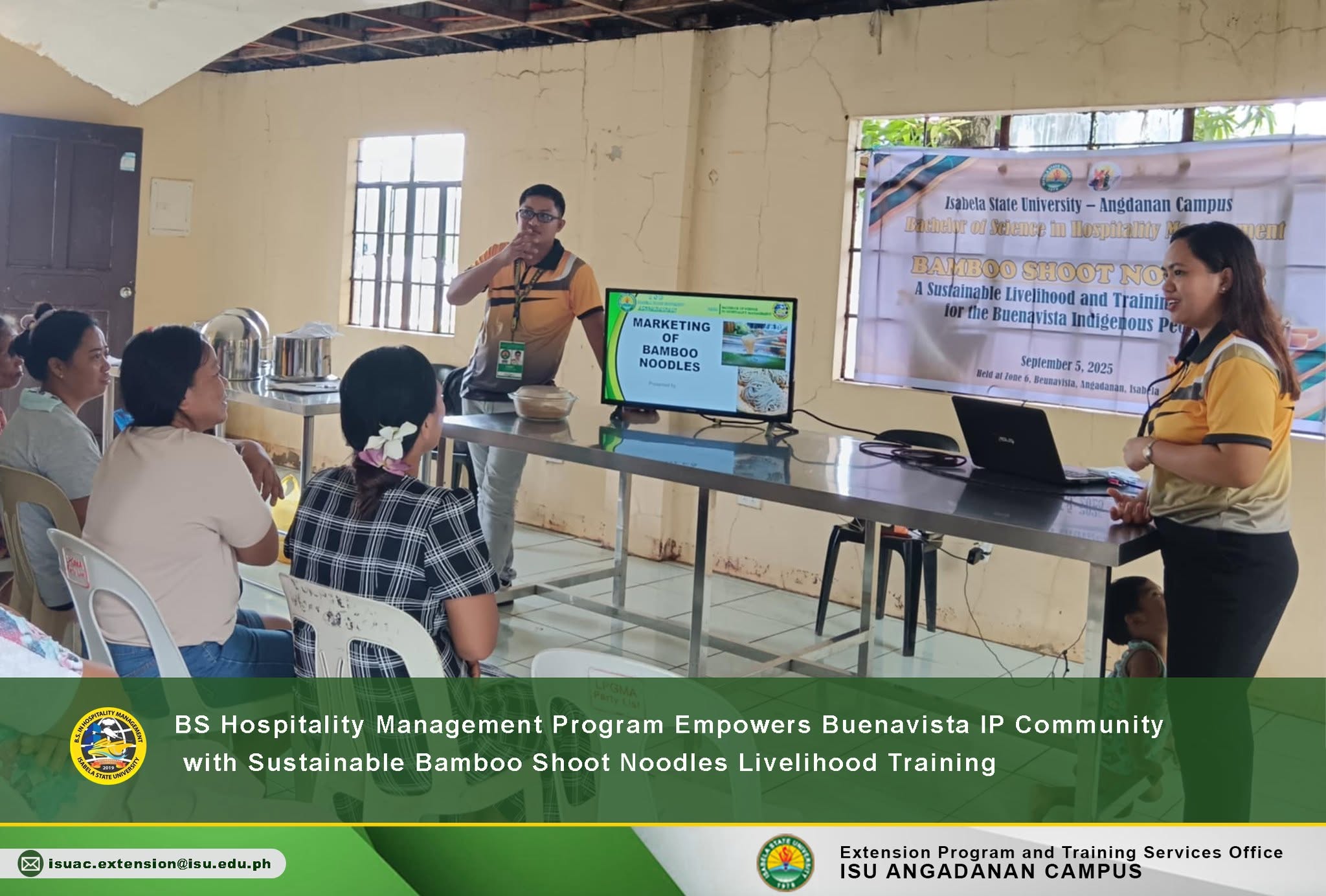
Isabela State University – Angadanan Campus, through its Bachelor of Science in Hospitality Management program, implemented an extension initiative entitled Bamboo Shoot Noodles for the Buenavista Indigenous Peoples (IP) community. The initiative aimed to promote sustainable livelihood opportunities and strengthen local economic capacity by transforming locally available bamboo shoots into value-added food products with potential commercial applications.
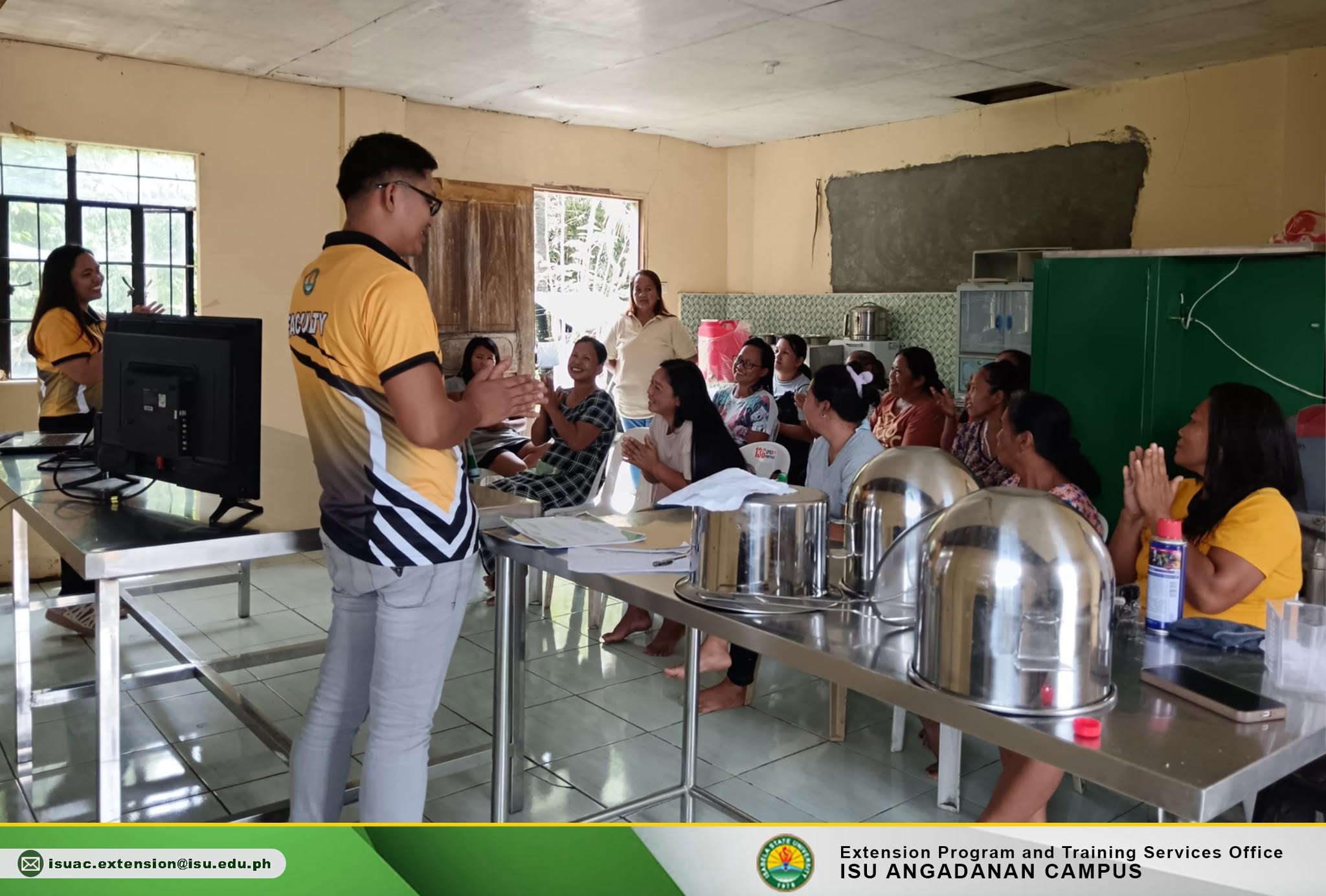
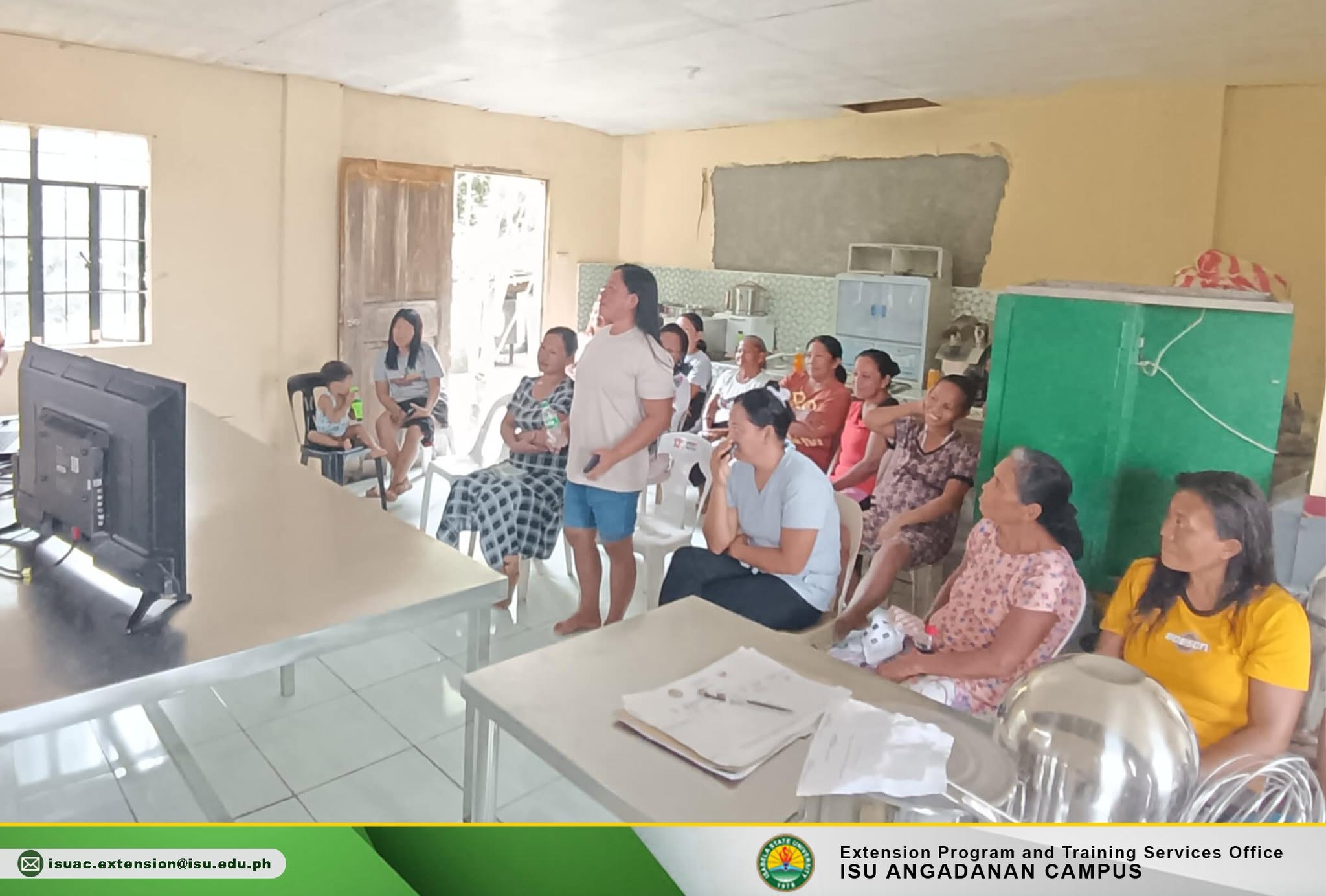
Through the program, the University provided technical assistance and practical training to community beneficiaries on processing bamboo shoots into marketable noodles. By introducing value-adding techniques and utilizing locally available resources, the initiative sought to help participants develop potential income-generating products while promoting food security, resource sustainability, and the preservation of indigenous knowledge.
A key component of the initiative was the session on Product Marketability, which equipped beneficiaries with fundamental entrepreneurial knowledge and skills in product branding, pricing, and promotion. Particular emphasis was placed on highlighting the indigenous identity and sustainable origins of the product to establish its market appeal and potential competitiveness.
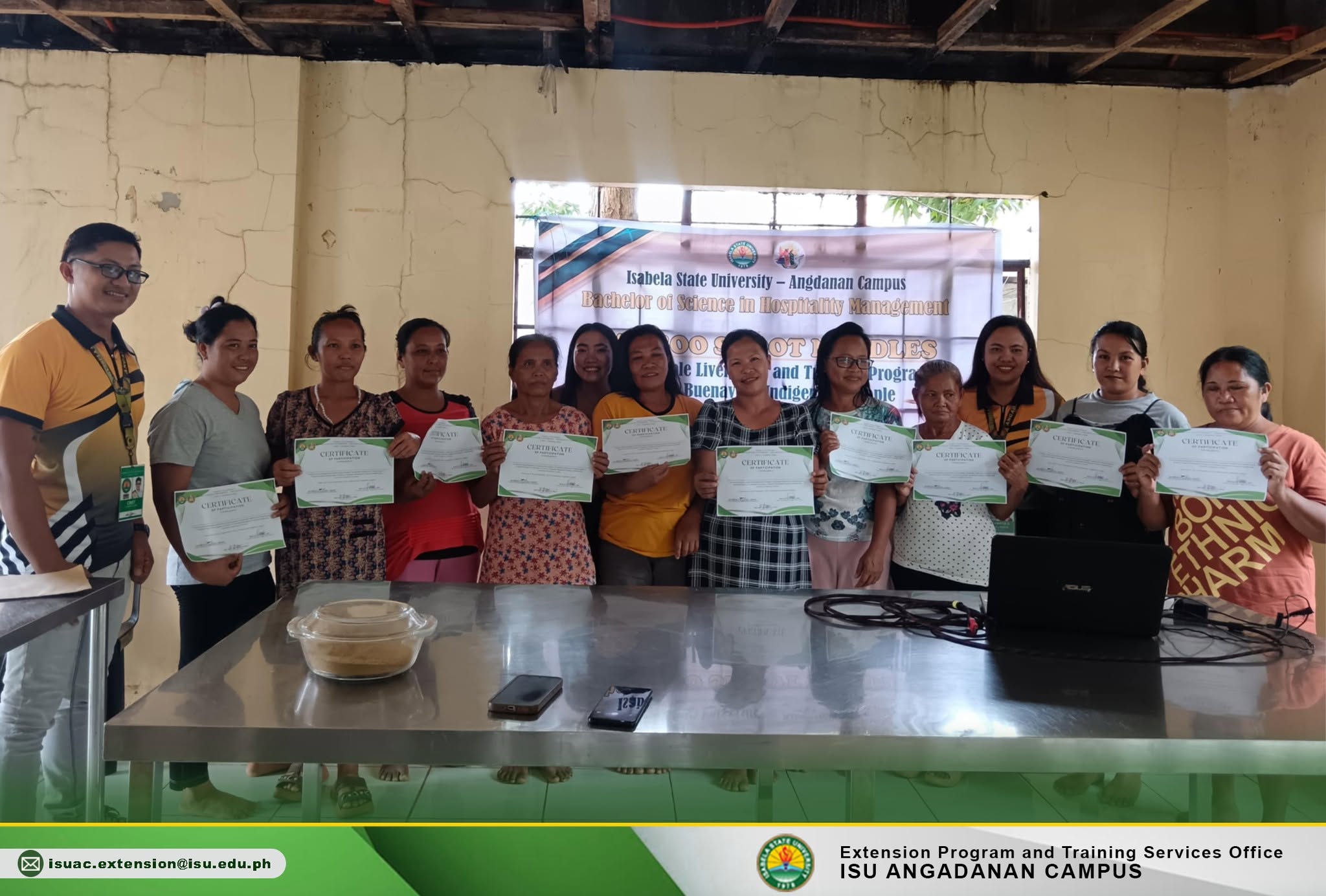
The activity concluded with a certificate-awarding ceremony, recognizing the participants’ newly acquired competencies and commitment to developing sustainable livelihood opportunities.
Through this initiative, Isabela State University demonstrates its commitment to community empowerment by extending its technical expertise, entrepreneurial guidance, and educational resources to indigenous communities. By helping beneficiaries transform local resources into value-added products and equipping them with essential business development skills, the University supports the establishment of potential community-based enterprises that can generate income, strengthen local economic participation, and promote financially and socially sustainable livelihoods while preserving indigenous cultural heritage.
Content and Photo Credits: ISU Angadanan Extension Office